
I build teams that
design better
than I could alone.
LEADERSHIP PHILOSOPHY
Twenty years in. The most important thing I've learned: the leader's job is to make the team's thinking better — not to be the best thinker in the room.

Point of view
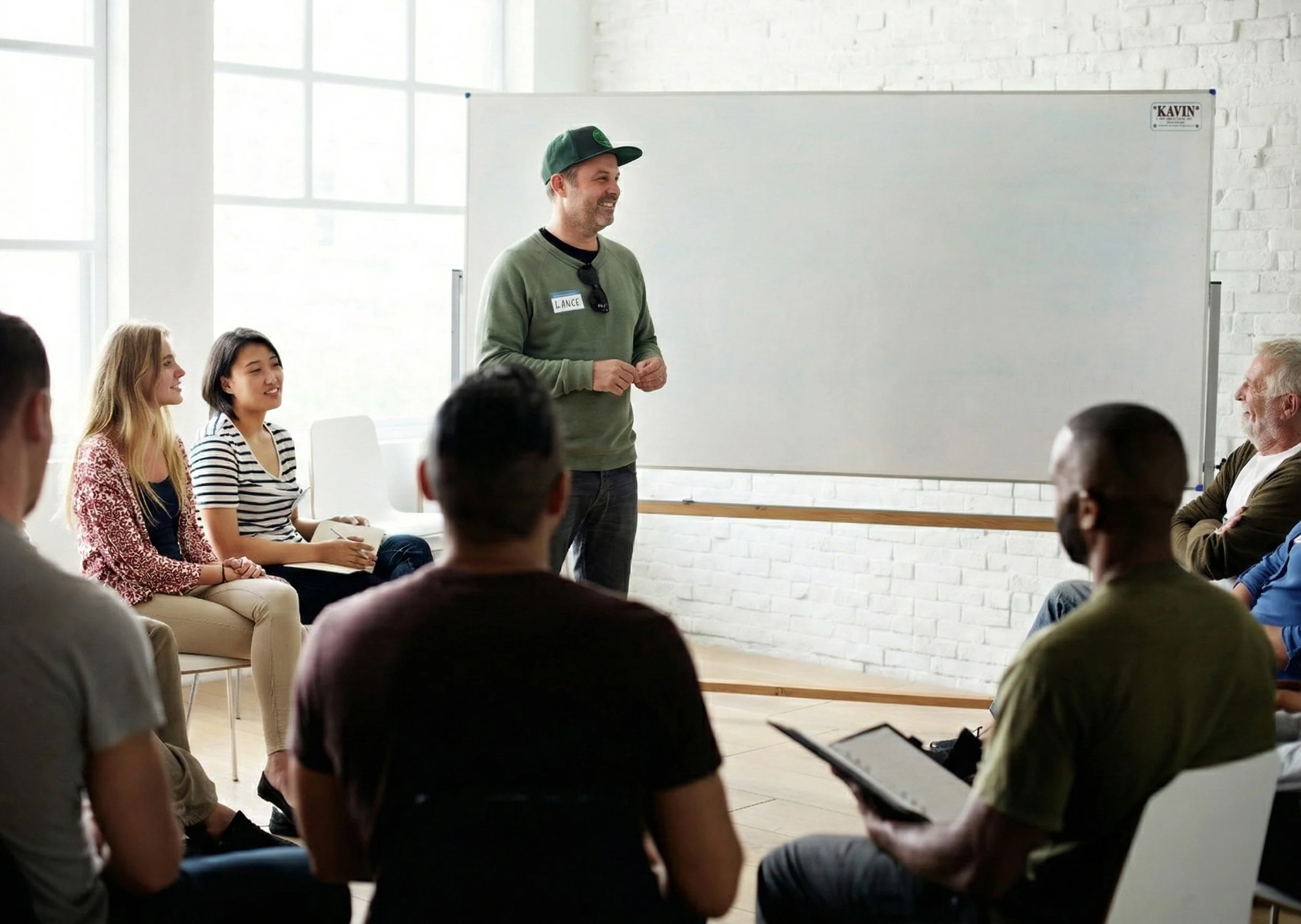
I've led design at three scales: co-founder, Adobe director, Walmart at 580M users. And the throughline has always been the same: building organizations that can hold a big vision and execute it. Twenty years in, that work is increasingly AI-first and the leadership challenge is more interesting than ever.
Philosophy
I came up as a maker. I spent years believing the best design leaders were the best designers, the ones with the sharpest eye, the fastest read on a problem, the most elegant solution. I was wrong, or at least incomplete.
The shift happened at Adobe, when I was asked to build a team from scratch to tackle a problem no one had solved: making Adobe's tools genuinely work for markets in Japan, Korea, Taiwan, and China. I couldn't design my way to that answer. I had to hire people who understood things I didn't, create conditions where they could do their best work, and advocate relentlessly for their ideas at the executive level.
That's the job. Not executing the vision but building the organization that can hold and execute a vision larger than any one person. I've done it three times now: building the International Design team at Adobe, scaling Express to a product-grade design organization, and establishing design operations at Walmart. Each time, the work was less about what I designed and more about what I made possible, and that's truer now than ever as AI reshapes what design teams can do.
How I work
-

Diagnose the team before the product
Most design failures are alignment failures, not talent failures. When something ships poorly, the process usually broke down before a single pixel was placed. I start every engagement by mapping the organizational problem first.
-

Hire for range, develop for depth
The best teams I've built were deliberately diverse in thinking style. Range creates productive friction and better decisions. My job is to hire for that mix, then give each person room to go deep on what they do best.
-

Protect craft under pressure
Scale and speed are constraints, not excuses. I've led design at 580M-user scale and know what it costs when quality standards slip. Part of the job is holding that line and making the case for craft when business pressure is loudest.
-

Lead through the AI transition
AI is changing what design teams can do and how fast they can do it. I help orgs figure out where AI accelerates the work, where it changes the craft, and where human judgment matters most. Not tool adoption but team evolution.
Leadership moments

Building a team no one knew we needed
Adobe · 2018
When I proposed Adobe's International Design team, there was no budget line for it, no precedent, and no clear owner. I had to make the case to senior leadership that design for global markets couldn't be an afterthought. It had to be a dedicated function with its own charter, hiring strategy, and seat at the product table. I wrote the org design, staffed it with designers in Japan, Korea, Taiwan, and China, and built the operational model for distributed cross-timezone collaboration from scratch.
→ Built 10-person team from zero. Launched mini apps reaching millions of users across APAC markets.

Developing people, not just products
Adobe · 2018-2024
The designers I've invested in most weren't always the most polished in the room. One I hired as an intern, others saw a capable executor, I saw strategic potential ahead of her experience. I gave her ambiguous vision work instead of safe execution tasks, coached her on defending a point of view, and eventually recommended her as founding designer on a new kids' creative app. She operated well above her tenure.
A second designer had excellent craft but couldn't yet operate at principal level. Over several years I raised his scope, gave him visible presenting opportunities, and held the feedback bar high. He became one of the most trusted presenters to our VP of Design.
→ Both reached levels they wouldn't have without deliberate investment. That's the work I find most satisfying.
Changing the strategy, not just the design
Adobe · 2022
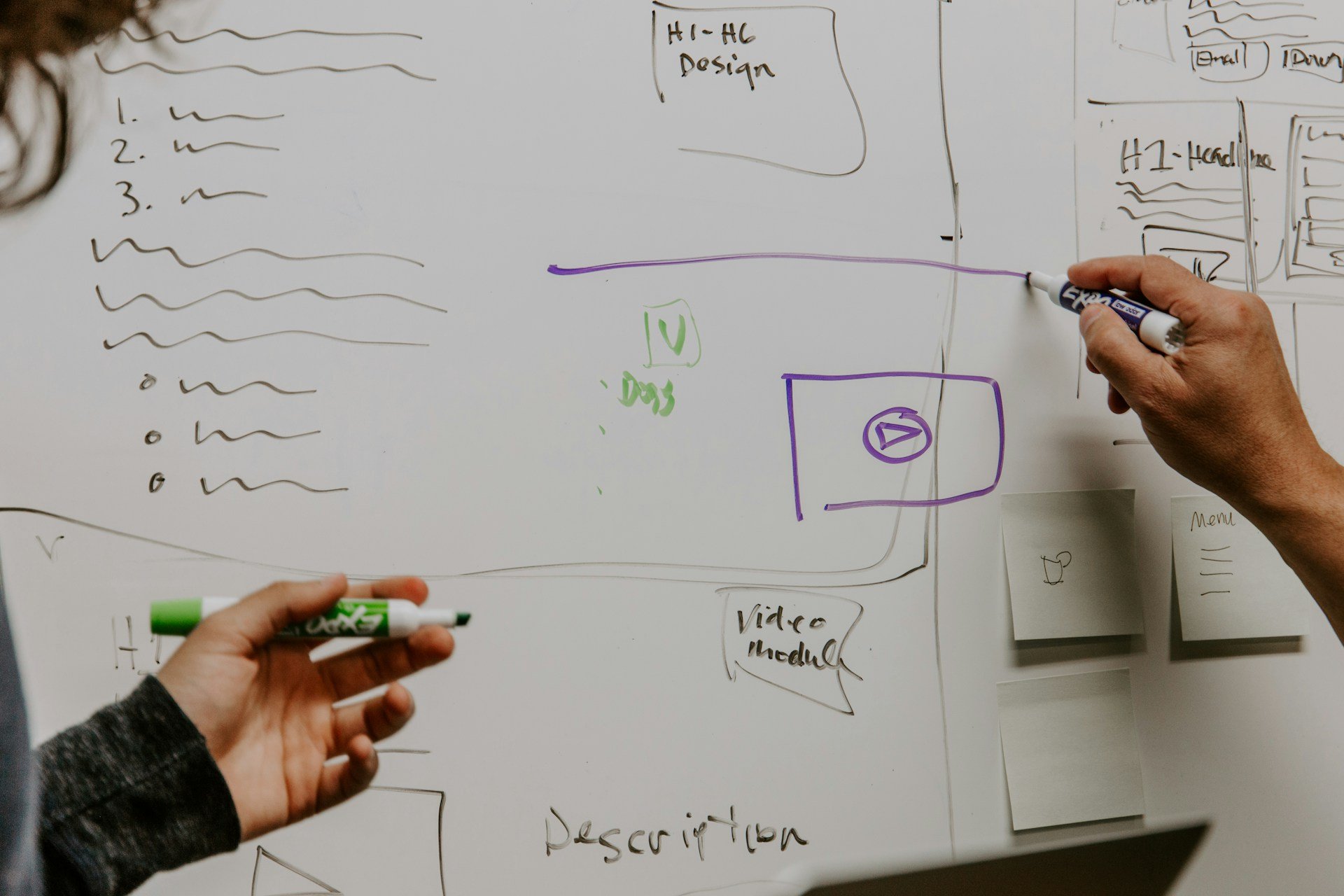
Adobe's plan for growing Express was to migrate Acrobat users into the standalone app. I thought that was wrong since users already lived in Acrobat, and forcing a context switch was adding friction to a problem we could solve differently. I led the design of an embedded Express SDK that met users where they worked, which meant challenging the prevailing assumption, aligning product and engineering leadership around a new direction, and defining a platform-level interaction model that hadn't existed before.
→ 1.2M users. ~8% of Express MAU. Express evolved from a standalone app into an embedded platform.

Designing for org trust, not just the product
Walmart · 2025
At Walmart's scale, showing up with a finished design vision is the wrong move. I recognized early that the real challenge wasn't the AI search design, it was getting a large, complex organization to believe in and co-own the direction. So instead of leading with answers, I led with questions, pulling in long-tenured PMs and engineers whose institutional knowledge I genuinely needed. The vision that came out of it was trusted precisely because it wasn't mine alone. This work also required helping the team develop new design patterns for AI-driven experiences, a capability the org hadn't built before.
→ Product and engineering VPs evangelized the work internally, accelerating investment decisions. Built a net-new AI-native product design practice.
From My Teams
-
![]()
“ Lance was instrumental in building bridges with the Acrobat team by showing rather than telling how we might embed Adobe Express. ”
Aubrey Cattell, VP Product, Adobe
-
![]()
"Lance's positive attitude towards cross-team partnerships truly resonated with me and will be a reminder to keep breaking silos between teams."
Lorenzo Buosi, Principal Designer, Adobe
-
![]()
“As a leader, Lance encourages the team to think outside the box and explore new ideas, and creativity is welcomed.”
Beate Fritsch, Sr Design Manager, Adobe
-
![]()
“He has a natural tendency towards mentoring young designers in their early careers and will go out of his way to help them."
Julie Ip, Staff Designer, Adobe



Let's build something worth leading
If you're building or scaling a design organization, especially one working at the intersection of AI and product, I'd love to talk about what that work actually requires.