
Your Portfolio Shows Your Past. Your Lab Shows Your Future.
Designers have kept labs, playgrounds and gardens for decades. AI just made them matter more.
For most of my career, a new idea meant a long wait. At agencies, at Adobe, at Walmart, getting from a sketch to something people could touch took a team, a roadmap and usually a quarter.
Lately I build things on my own. A globe that traces how words like orange and typhoon traveled across languages. A Figma plugin that saves the vibe coding conversation behind a design. A two-minute illustrated story I described into existence in a day.
They live on a page of my portfolio called AI Lab, and I keep finding pages like it on other designers' sites. Ryo Lu, Cursor's head of design, turned his whole site into one.
I think these experimental corners of the internet are becoming one of the most important parts of a designer's portfolio. Here's why, and ten labs worth your time.
Every name for these pages means the same thing: unfinished is welcome
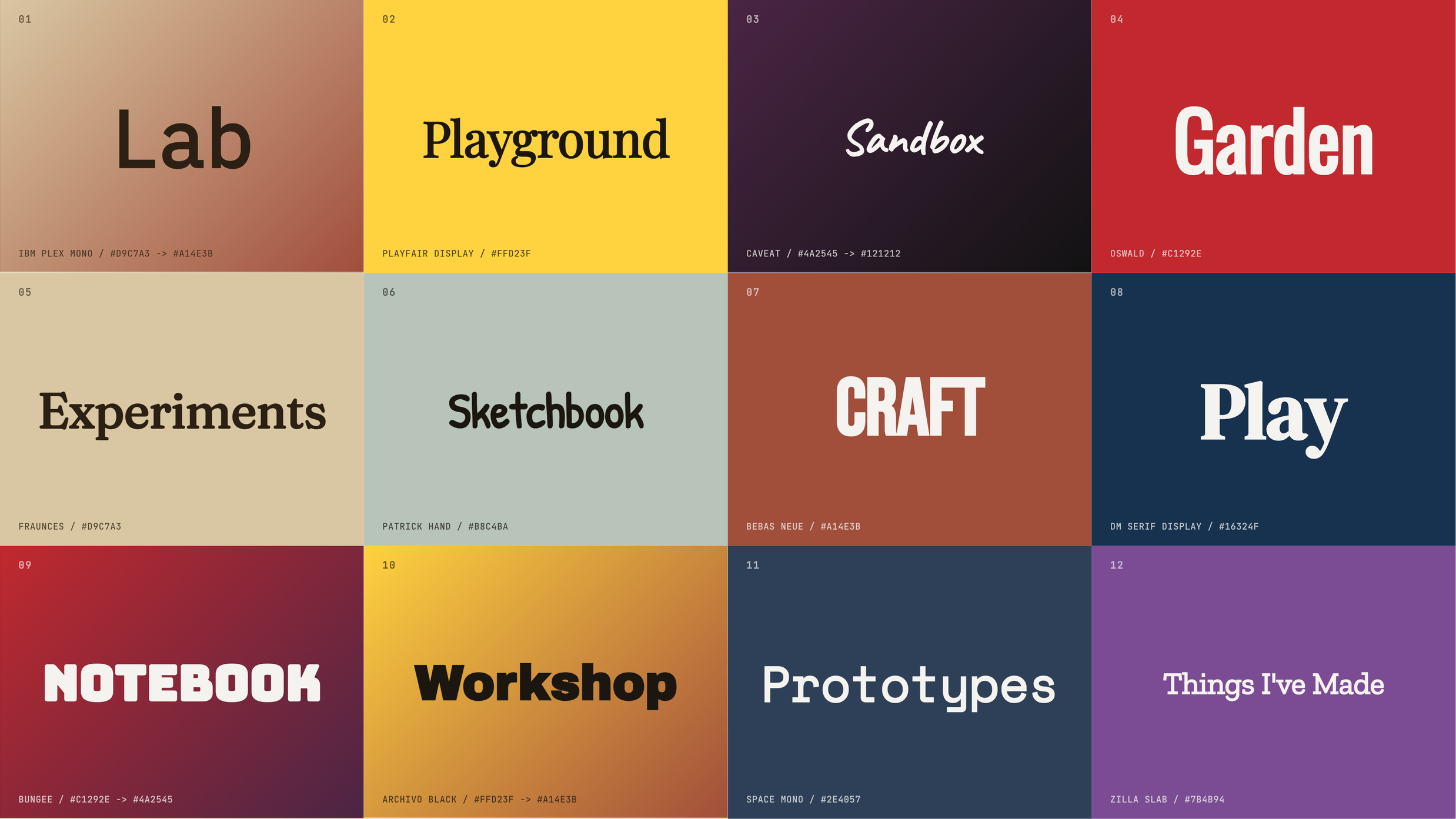
Designers call these pages many things. Lab. Playground. Sandbox. Garden. Experiments. Sketchbook. Craft. Play. Notebook. Workshop. Prototypes. Things I've Made.
Almost every name describes a place where unfinished work is allowed. A lab runs tests that might fail. A playground has no stakes. A garden grows over time. A sketchbook holds drawings you'd never frame. The emphasis shifts from rigor to play, but the message is the same: this is process, not a polished deliverable.
Designers make them for the same reason people have always made things on the side. Client work and roadmaps come with constraints, and a lab is where you work without them, learning a new medium or chasing an idea nobody asked for. The career benefits came later.
What's inside runs the gamut. Open-source repos others fork and extend, like Ryo Lu's ryOS and David Nguyen's ProductRubric. Generative art, like Lea Naisberg's logo generators and type tools. Useful tools, like Lorenzo Buosi's Sumi, which lets you point an AI coding agent at the exact spot on a page you want changed. And the beginnings of businesses: David's User Sage started as a lab experiment and is now his company, and one of my experiments became a studio.
None of this started with AI. In the late 1990s, Flash designers like Joshua Davis with Praystation and Yugo Nakamura with yugop.com built famous sites full of experiments with no client at all. Processing gave designers a coding sketchbook in 2001. Google launched Chrome Experiments in 2009, and CodePen followed in 2012. The garden metaphor goes back even further, to Mark Bernstein's 1998 essay Hypertext Gardens, as Maggie Appleton traces in her history of the digital garden.
What changed is the distance between an idea and a working version of it. That gap used to be months, and it usually required knowing how to code. Now it can be a weekend.
Hiring managers want proof you can still make things
Your portfolio shows what you could do in your last job. A lab shows what you can do this month.
That difference matters more than it used to. In Figma's February 2026 hiring research, 73% of hiring managers said they see a growing need for designers proficient in AI tools, and 79% said the same about designing AI products. Every designer's résumé now says AI-native. A live URL is how anyone checks.
Two equally experienced designers might both claim AI fluency. One lists the tools. The other lets you try something they built with them. That doesn't make the second one the better candidate. It gives the hiring manager something concrete to evaluate.
Reviewers move fast, too. Tommy Geoco reports on a study that timed 16 design leaders reviewing portfolios at an average of 55 seconds each. A case study asks to be read. A lab can be clicked.
A lab supplements your case studies rather than replacing them. Case studies show what you've accomplished, how you work with a team and your impact at scale. A lab shows what you're exploring, how you learn and what your judgment looks like on your own. Hiring managers need both.
Building teaches what demos hide
You can read every newsletter about AI and still not know what it feels like to use these tools. Building closes that gap fast.
When I made Words Travel, I researched the word histories with ChatGPT, shaped the experience in Figma and built it with Codex and Mapbox. Every handoff showed me where the tools were strong and where my judgment had to take over. Like the realization that wanted to hear each word pronounced at each stage of its journey. I couldn't have learned that from a demo video.
A lab gives that learning a home and a reason to keep going. Think of it as a personal R&D budget, paid in weekends.
When everyone can build, judgment becomes the job
The same tools that make labs possible are making them less special. Anyone can generate a working app from a prompt. A weather app built in an afternoon says very little about a designer.
What still says something is the question behind the work and the care in how it feels. Maggie Appleton, who builds AI prototypes at GitHub Next, argues that producing more code matters less than deciding what's worth building. I'd go further. When code gets cheap, that decision becomes the job.
Figma's data agrees. Even with AI fluency in demand, 58% of hiring managers still rank visual polish among a designer's five most important skills. Craft stayed. It became the filter.
The labs I admire most explore ideas that would never make a roadmap. That's much harder to fake than a grid of vibe-coded toys.
The more senior you get, the easier it is to stop making things
Most portfolio advice targets early-career designers. Juniors benefit from a lab too, since it shows initiative before they've shipped major products. Senior designers face a quieter problem.
The further you go, the further you drift from making. Your weeks fill with reviews, strategy, hiring and executive conversations, all of it necessary. Meanwhile the tools keep changing.
There's an attribution problem too. A director's best case studies are team efforts, often under NDA. A lab is the one part of a senior portfolio with clear authorship. You made it, and anyone can try it.
Demand is shifting toward experience. In Figma's research, 56% of hiring managers reported growing demand for senior designers, versus 25% for junior roles. Those candidates will be asked what they can do with today's tools, and a lab answers before the interview starts.
Personal experiments also skip the constraints that slow big companies down. You can try a new coding tool the week it ships, no business case required. That's reason enough to keep a lab even when you're happily employed.
Ten labs, ten specialties
Each of these labs is great at something different, and each one teaches something you can use in your own. Not all of them are strictly about AI. Some come from the older traditions of creative coding and independent research, which is part of the point.
The lab as product incubator: David Nguyen
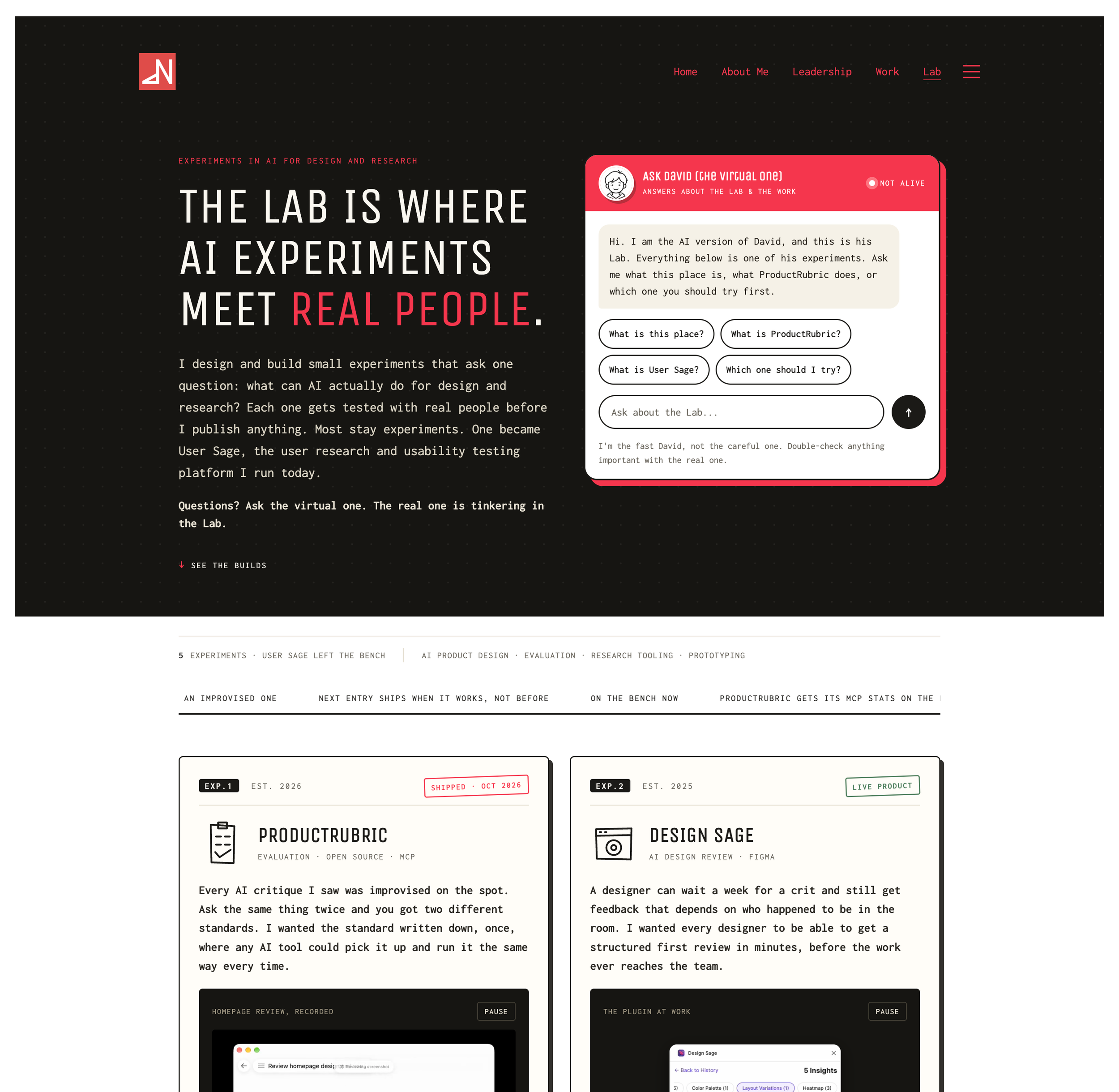
David's Lab specializes in rigor. Every experiment gets tested with real people before he publishes it, and the good ones graduate. Design Sage reviews designs inside Figma. ProductRubric is an open library of 20 evaluation rubrics any AI assistant can run. One experiment became User Sage, the research platform he runs today. His rule is the best line I found: AI gives you the hypothesis, and findings take real people. The lesson is to start with a real problem and let real people decide which experiments grow up. David is also one of the co-founders with me of meetup AI Design LA.
The lab as tool bench: Lorenzo Buosi
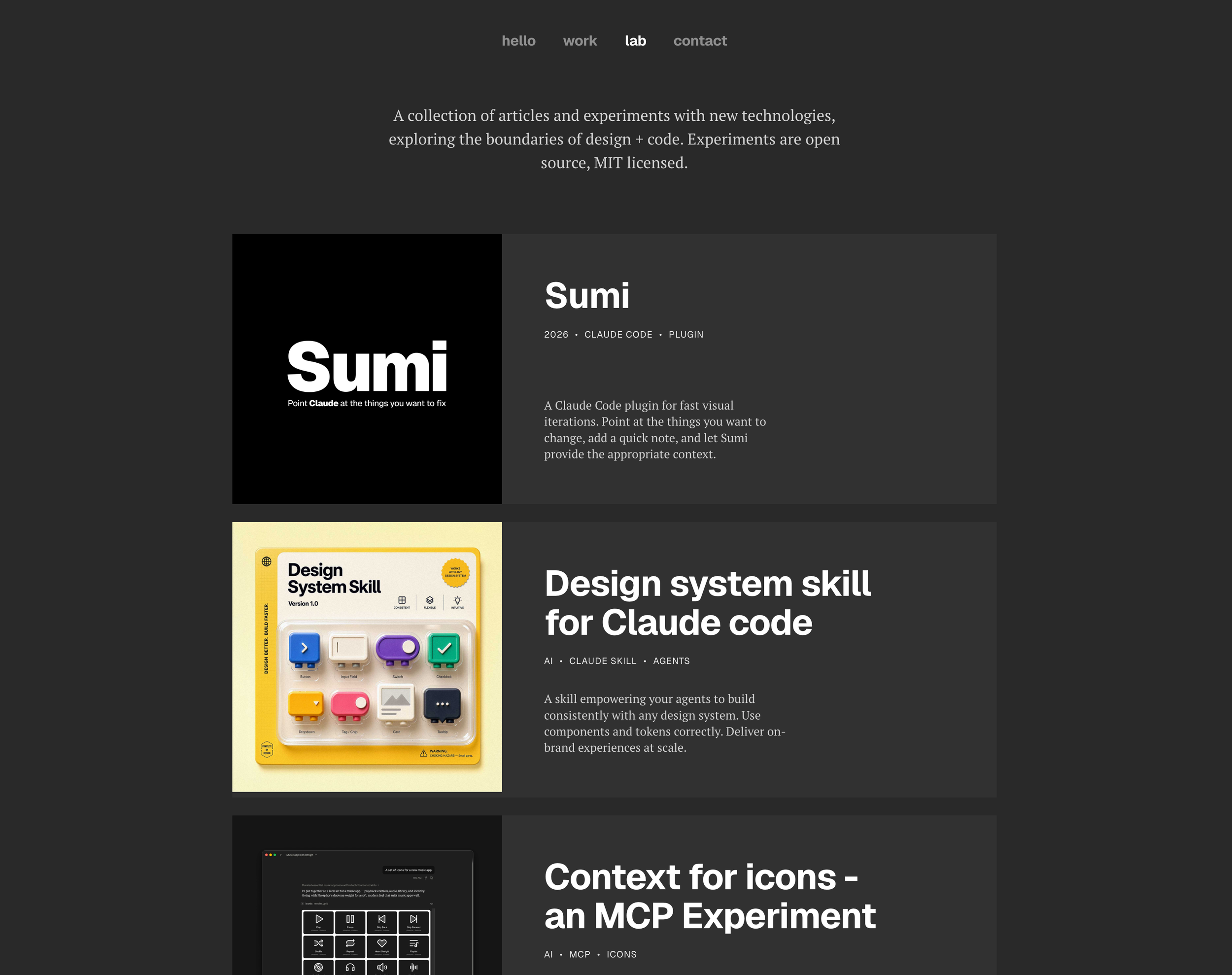
Lorenzo's Lab specializes in tools that make AI easier to design with. Lorenzo was on my team at Adobe, where we built a lot of fun Adobe XD plugins. He's still there, now making tools for designers working with AI agents while building his own apps. His experiments are MIT-licensed open source. The standout is Sumi, a free Claude Code plugin: pin, box or brush over a web page, add a note, and Claude gets the exact element to fix. It solves one of the most frustrating parts of building with AI, describing a visual change in words. Alongside it are a design system skill that keeps agents on-brand and Iconic, an MCP experiment that helps agents find icons by intent. Build the tool you wish you had, then give it away.
The lab as visual argument: Maggie Appleton
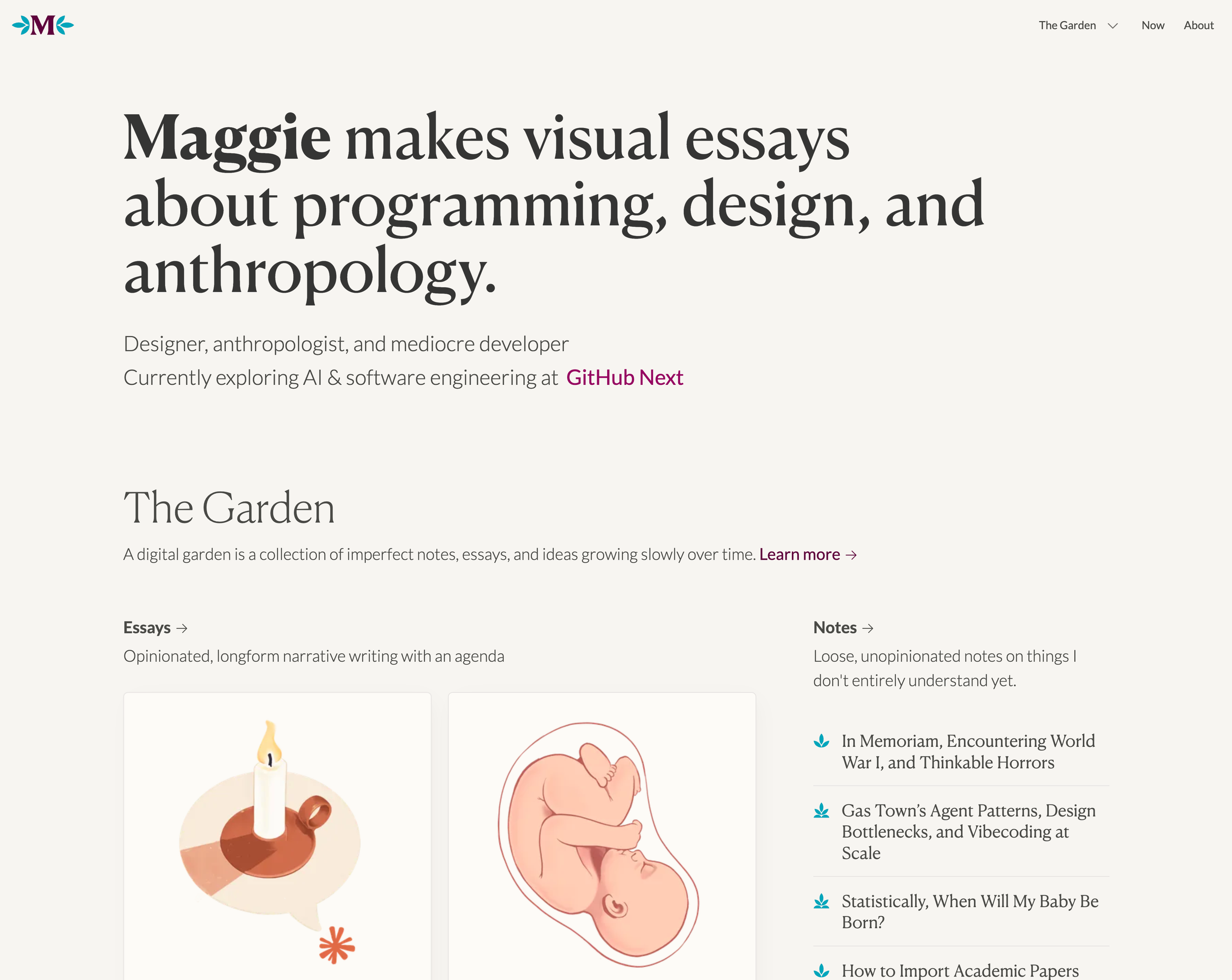
Maggie specializes in explanation. She pairs working prototypes with illustrated essays, so each experiment arrives with the reasoning behind it. She now builds AI prototypes at GitHub Next. Her garden shows that the write-up can be as designed as the prototype itself.
The lab as critique: Amelia Wattenberger
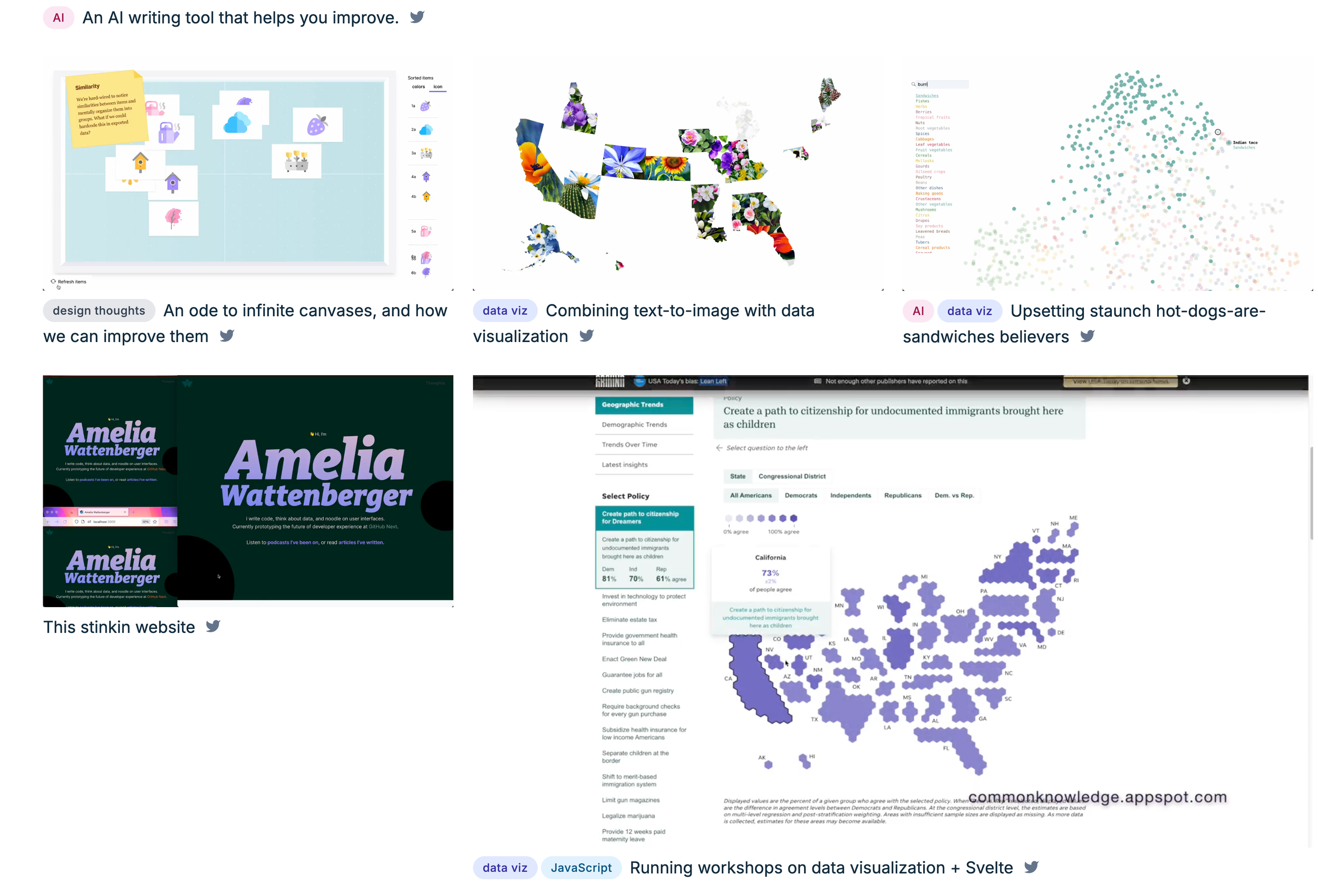
Amelia specializes in questioning the defaults. Her interactive essays pull ideas from decades of interface history to challenge how AI products work today. Her latest argues that chat is AI's command line, good for rough direction and clumsy for everything after. You don't have to ship an app to run an experiment. A well-built argument counts.
The lab as a world to explore: Ryo Lu
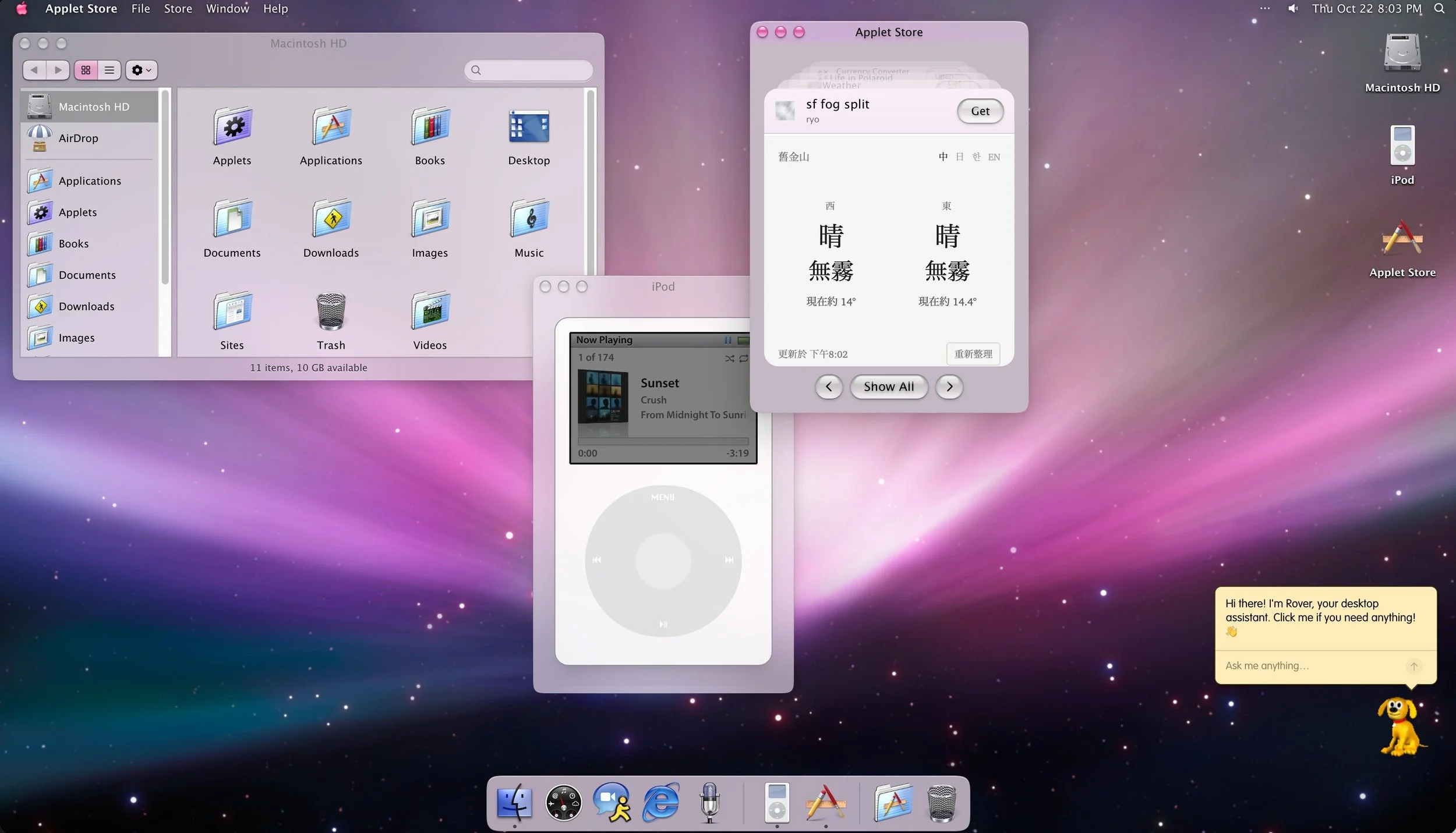
Ryo specializes in immersion. And he's also head of design at Cursor. His whole personal site is ryOS, a retro desktop built with AI, with a working iPod, a paint app and a terminal where you can summon an AI agent to write code. It's open source and built to be forked. Your portfolio can be the demo, so people experience what you can do before they read a word.
The lab as craft benchmark: Rauno Freiberg
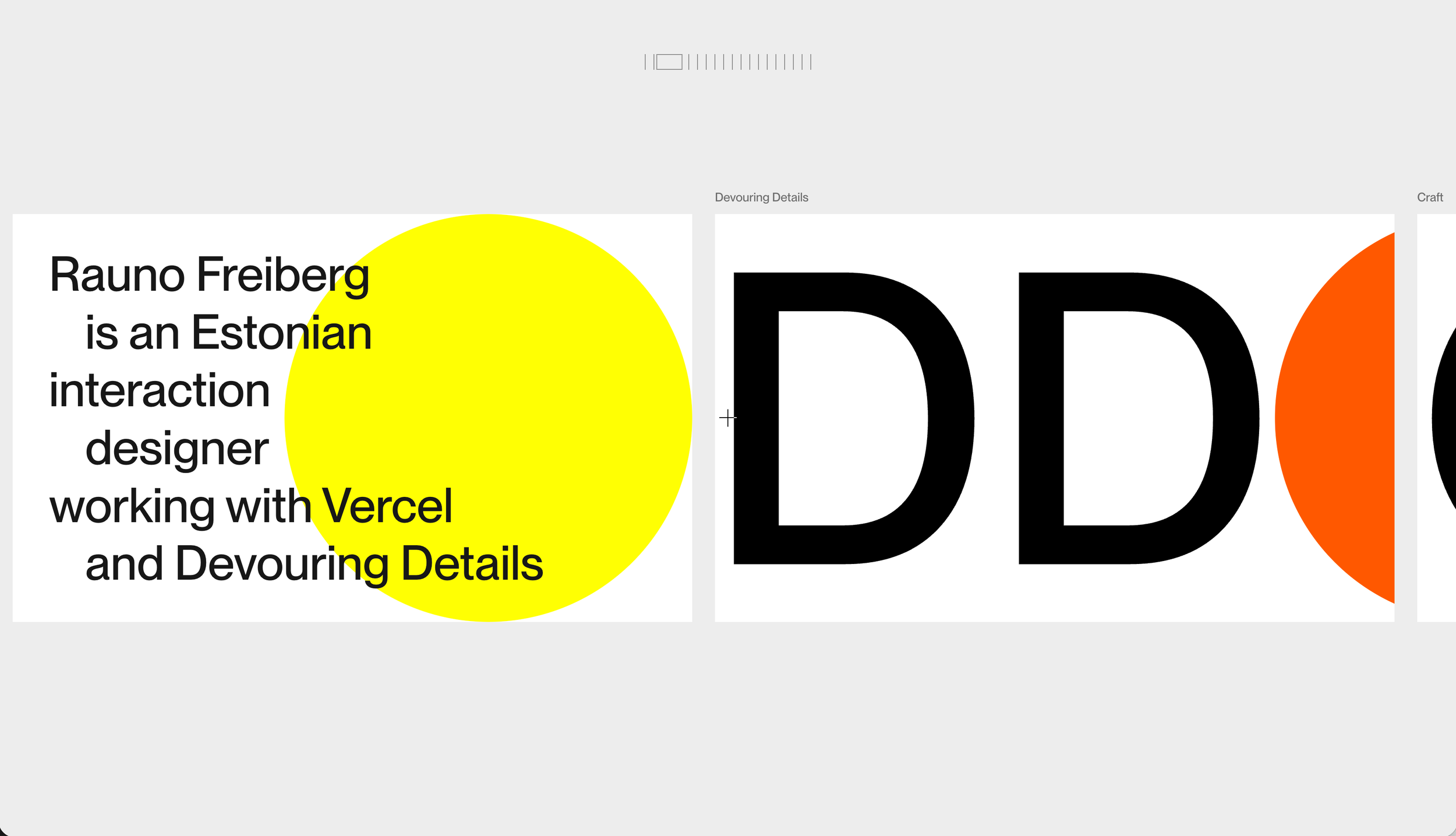
Rauno, a staff design engineer at Vercel, specializes in interaction detail: the sounds, motion and feel that make software seem alive. His work isn't about AI. It's here because it sets the standard every AI lab gets judged against. AI makes interfaces cheaper to produce. Quality stays expensive.
The lab as sketchbook: Jhey Tompkins
Jhey, a designer and engineer on Shopify's brand design studio, specializes in volume and surprise. His homepage leads with his latest prototypes, each filed by year, with a full index behind them. Most are small interface ideas that make you wonder how he did it. A steady stream of small, dated experiments shows a practice that's alive in a way one polished showpiece can't.
The lab as playground: Chloe Yan
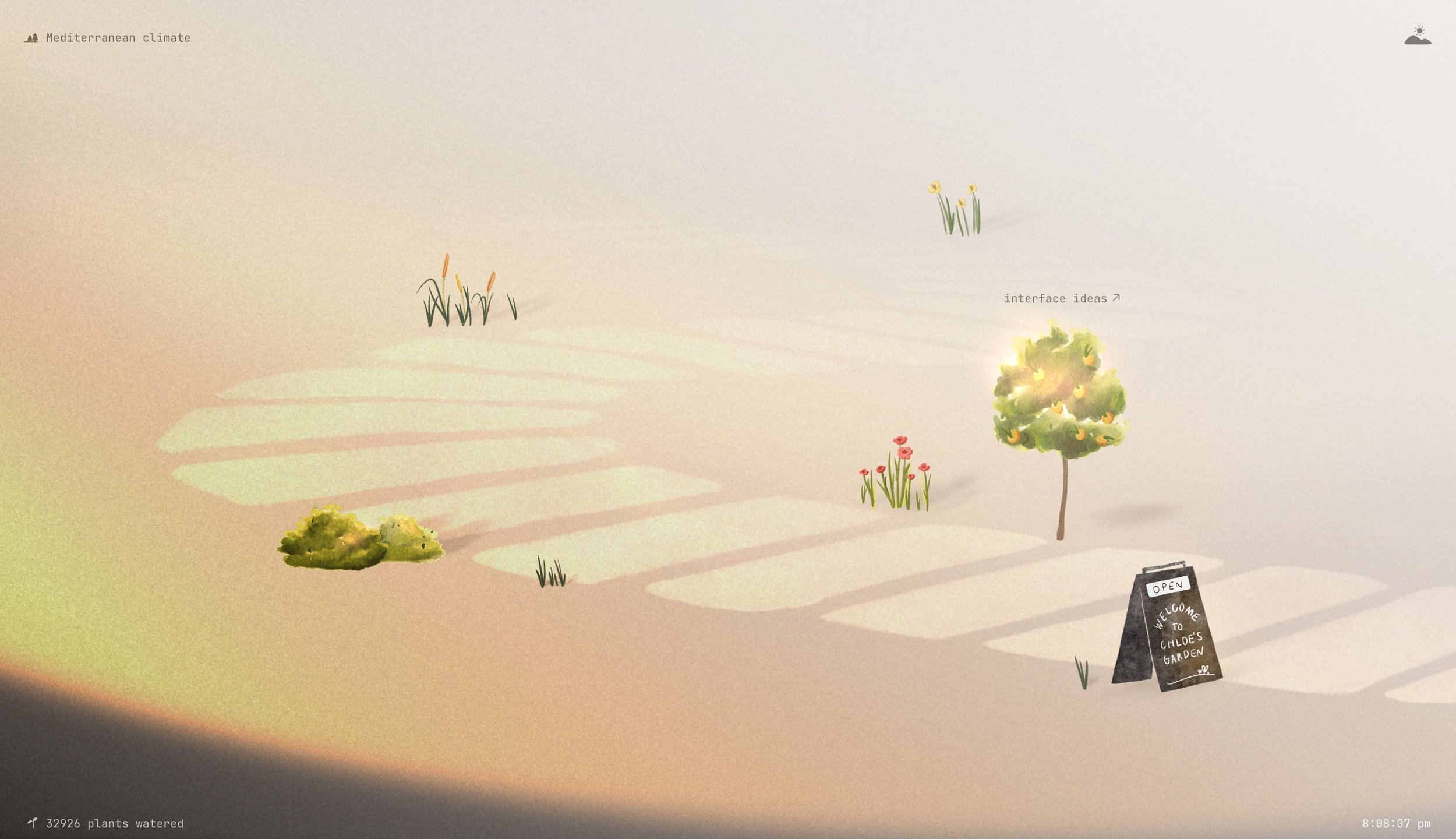
Chloe specializes in play that holds attention. Tommy Geoco named her interactive playground among the portfolios getting callbacks at companies like Cursor, Vercel and Figma, and admitted he spent ten minutes on it the first time. In a 55-second review, curiosity is what earns the extra minutes.
The lab as generative system: Lea Naisberg
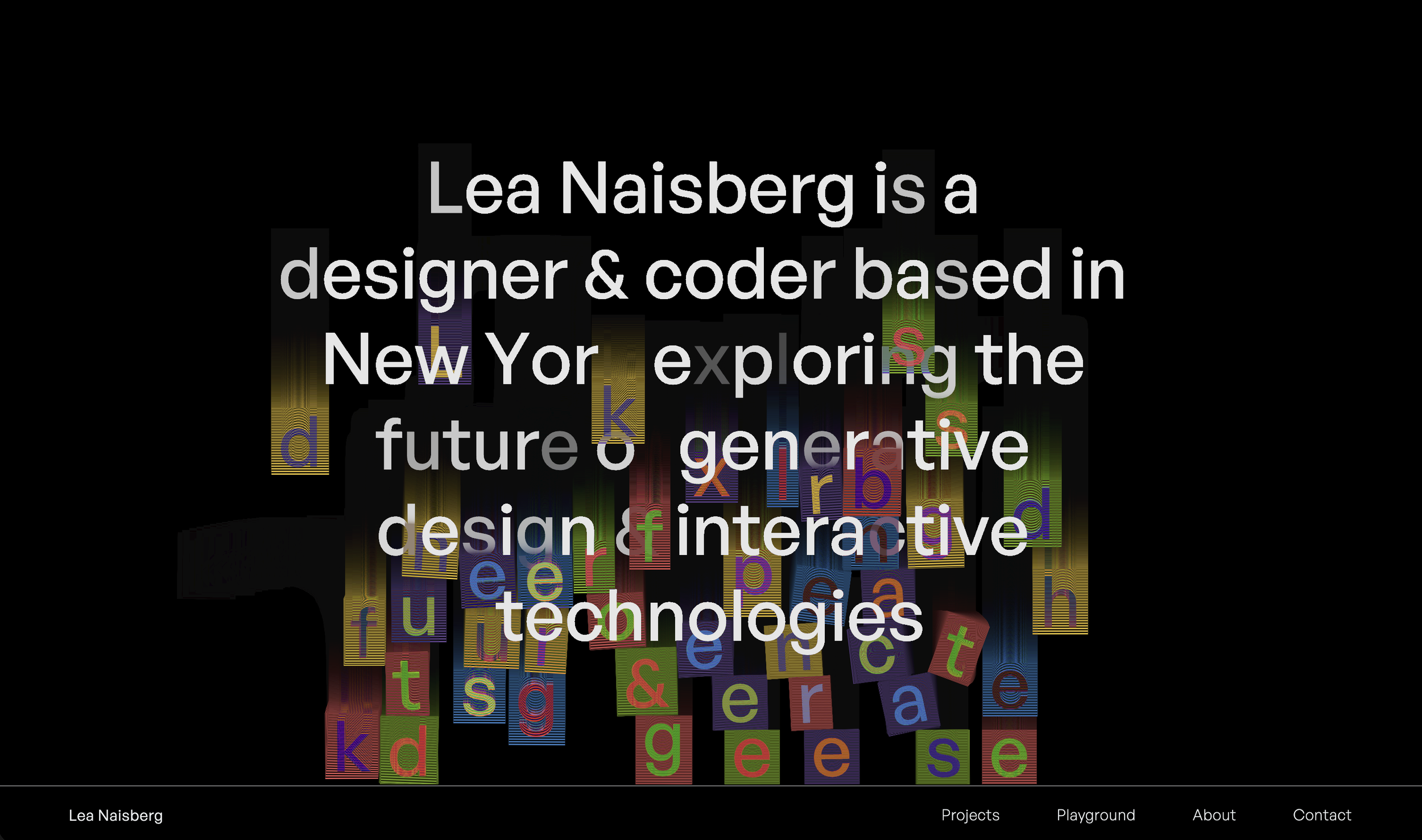
Lea, a designer and coder in New York, specializes in tools that make designs. Her work includes logo generators, interactive typography, a face-driven type tool and physical installations, with a Playground of creative coding sketches alongside. She also founded Creative Coding NYC, a weekly meetup for people working where art, design and code overlap. Design the system that makes the design, and share what you're learning with other people doing it too.
The lab as creative translator: mine
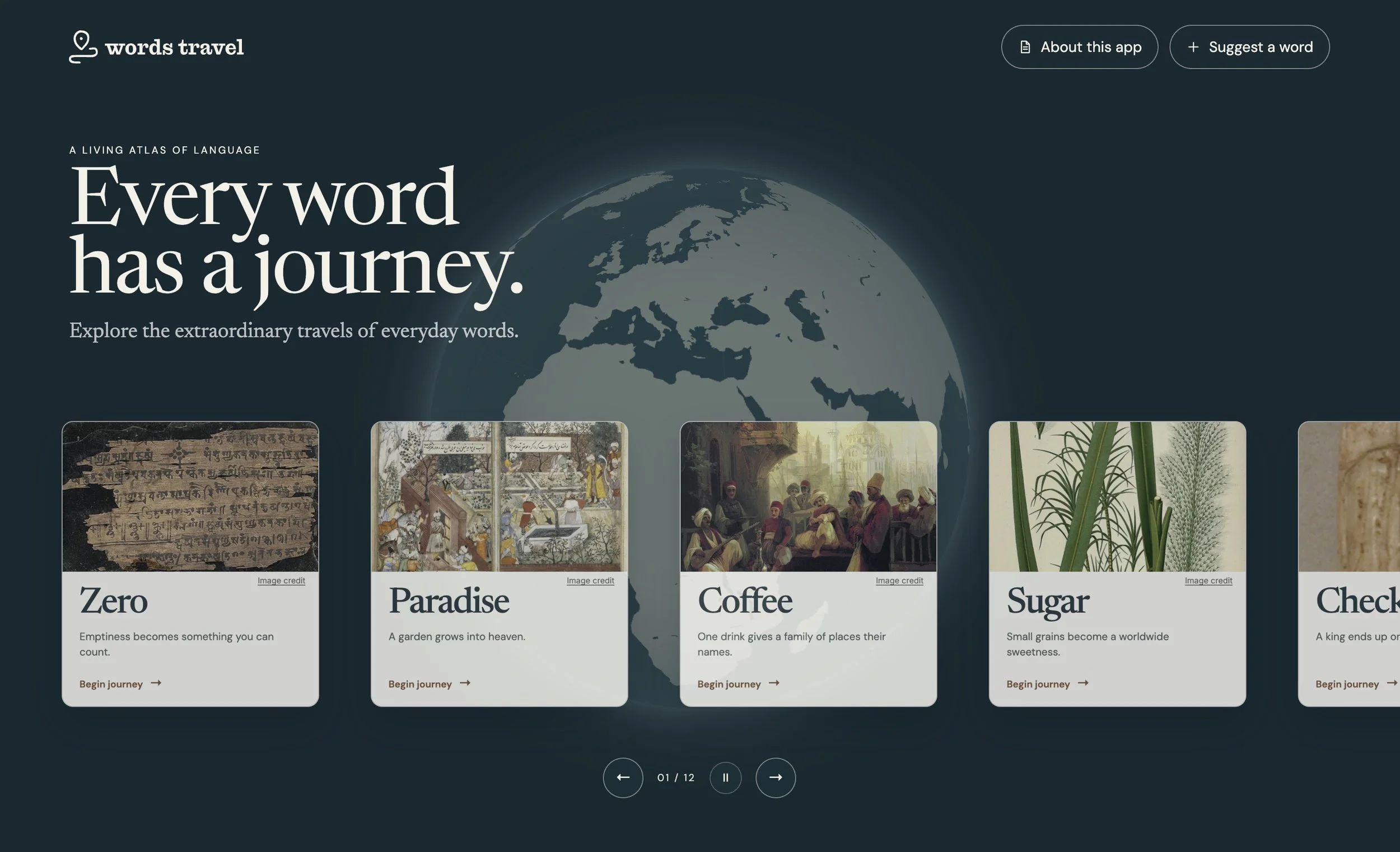
My AI Lab specializes in creative translation: taking meaning from one form and carrying it into another. Words Travel turns the histories of words like orange and typhoon into a globe you can spin. We Are the Ones started as a story told in plain language and became a two-minute illustrated piece in a single 84-kilobyte HTML file. Prompt Annotations captures a vibe coding conversation as context a design team can use. Raft for Machines runs the other direction, rewriting a website for AI readers and testing whether they’ll actually read it. I didn’t plan that thread. I found it by building, which might be the best argument for starting before you have a thesis.
You don't need a dozen projects. Start with one.
Looking at these labs, it's easy to think you need a dozen polished experiments before publishing anything. You need one.
Pick a starting point. Solve a small problem that annoys you every week. Explore an interaction you could never justify on a roadmap. Or test how AI changes a workflow you know well, like research, critique or handoff.
Then build something small and put it online with a short note: the question, what you built, what surprised you and a link to try it. That note is where your judgment shows, so say what the AI got wrong and what you changed. Add a date. Progress over time tells a better story than any single project.
It doesn't need to be commercial, and it only needs users if it was made for them. Interactive art counts. Some experiments become products. Most stay experiments, and that's fine. The learning is the return.
If you're stuck, build something for one real person, like your partner or a teammate. A small tool for a problem you understand will teach you more than another month of AI demos.
Your next portfolio piece might start this weekend
The portfolio used to be a record of finished work. More and more, it's a workshop with the door open.
What I like most about this trend is that designers are taking back control of what we learn and make. You don't need an approved roadmap or a new job. You need a question and a free Saturday.
AI makes it easier for everyone to build software. So the question is no longer whether you can build something. It's whether you can recognize what's worth building. That's still a design problem.
If you have a lab or a strange little experiment, share it in the comments. I'd love to see what you're making.
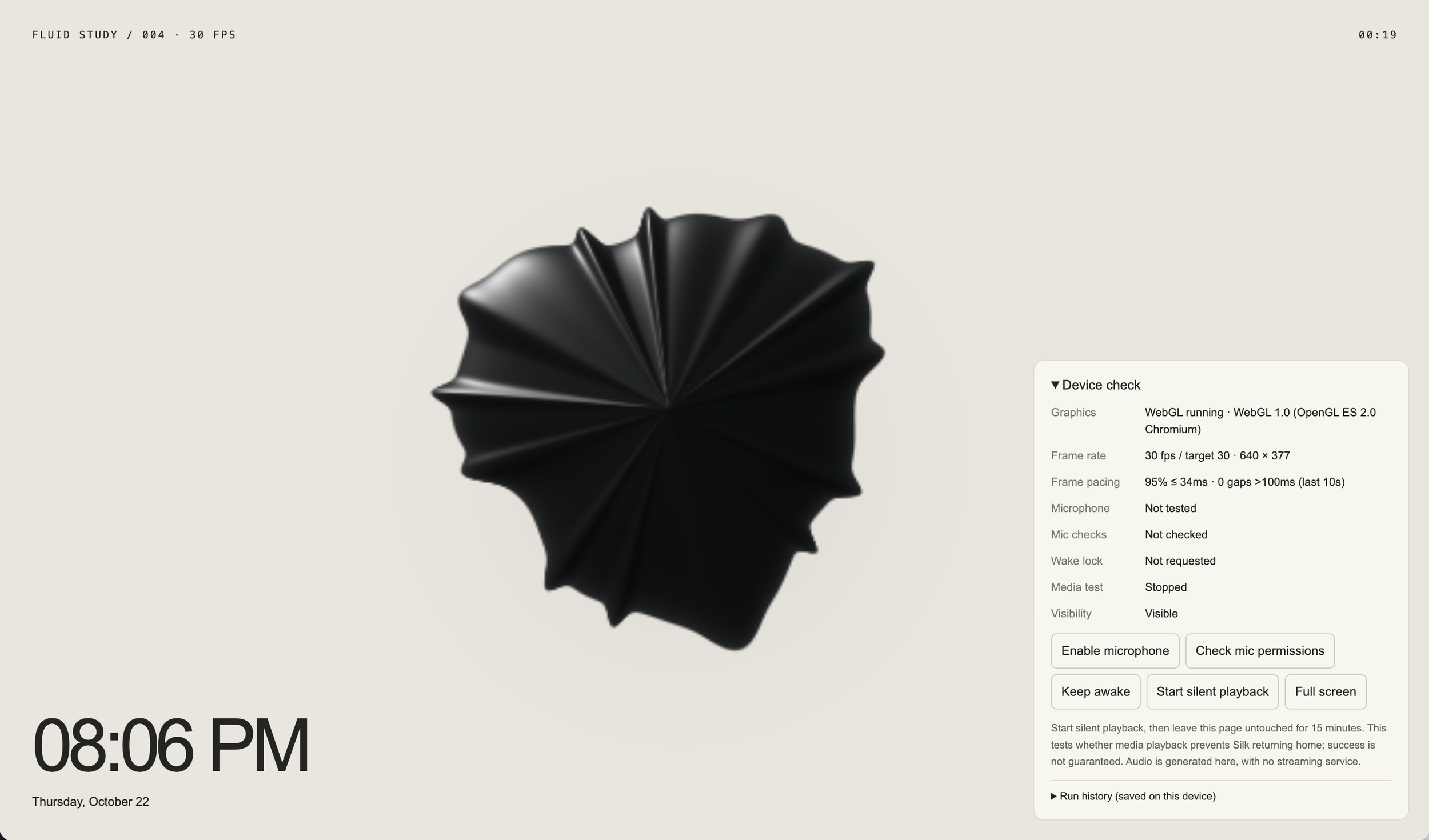
P.S. - I made the image for this article with this little experiment.
