


Tinkering is how I think.
I’ve done it since I got an Apple II to type my name. Most of what I build translates meaning from one form into another: word histories into a globe, a story into a film, a website into something AI can read. One became a studio.
01
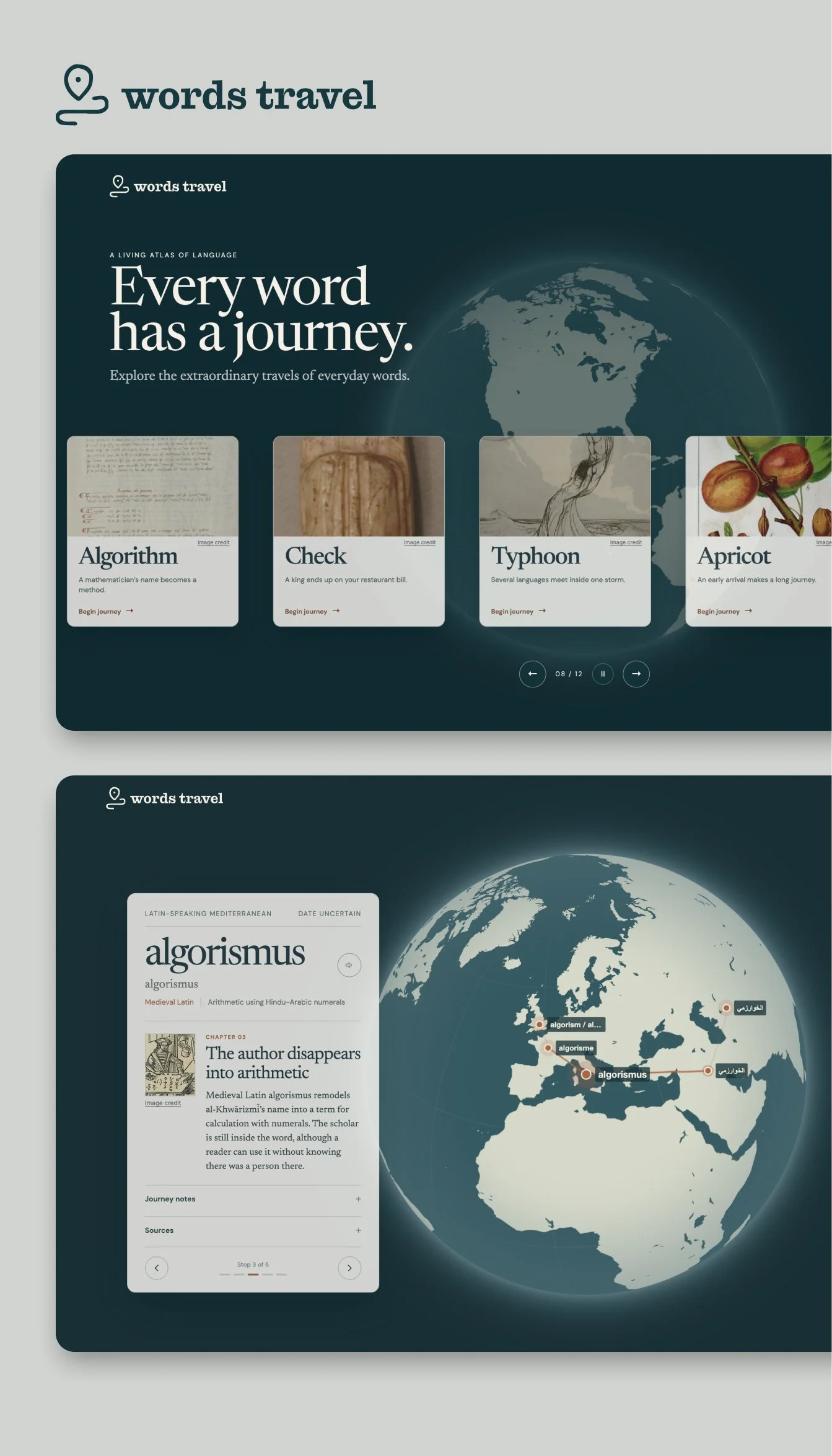
Words Travel
10/2026 — Reading Babel by R. F. Kuang made me curious about the histories hiding inside everyday words. Words Travel turns that curiosity into an interactive globe where you can follow words like orange, magazine, and typhoon across languages and centuries. Each stop reveals how people changed a word’s sound or meaning as it passed through their culture. I researched the journeys with ChatGPT, shaped the experience in Figma, and built it with Codex and Mapbox. A small collection of familiar words becomes a way to explore how language carries traces of the places it’s been.
- ChatGPT
- Figma
- Codex
- React
- Mapbox
02
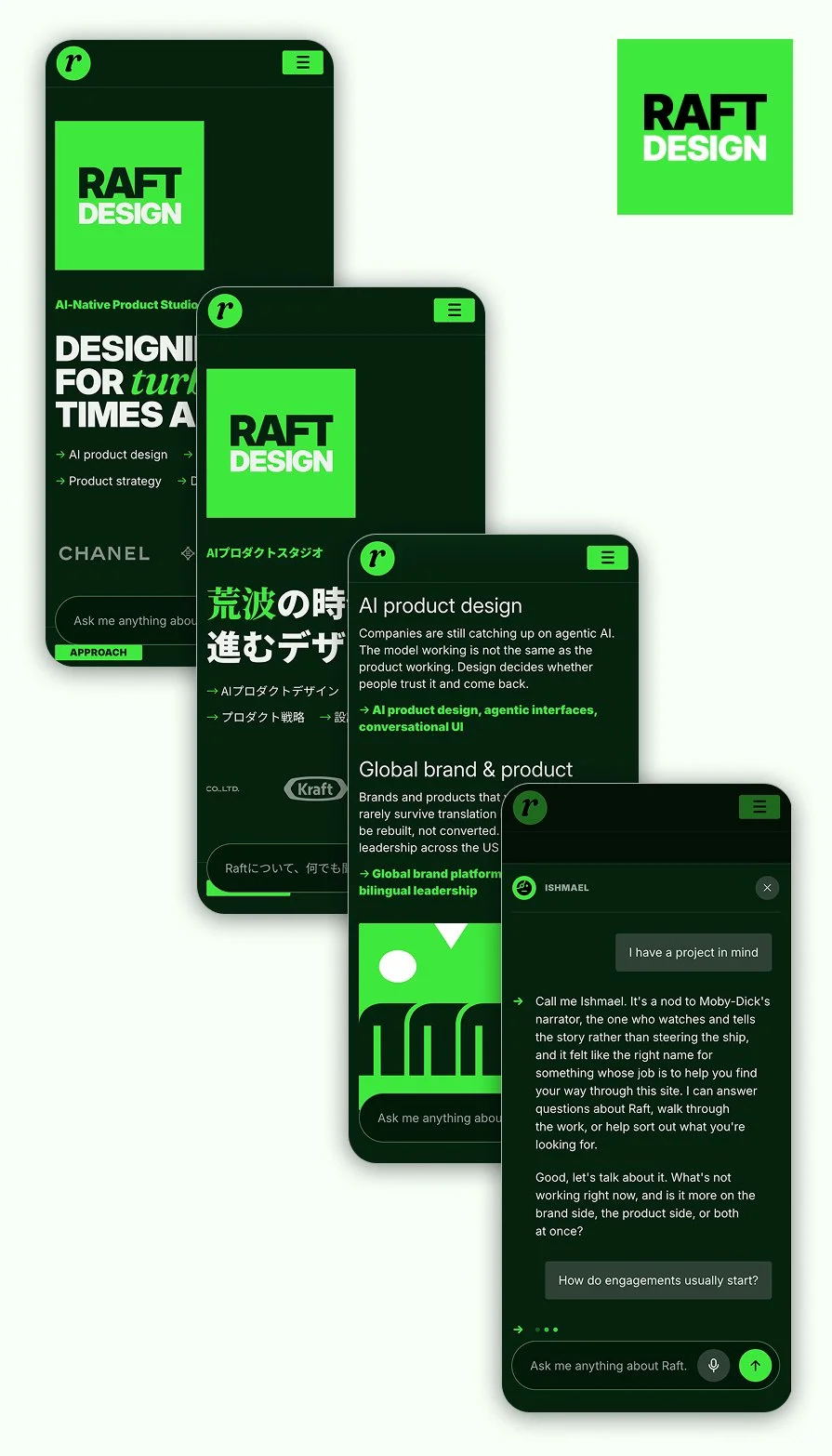
Raft Design
09/2026 — Raft Design is my AI-native brand and product studio, built bilingual in English and Japanese from day one. The site runs on Vercel with a full EN/JP architecture and GEO infrastructure, plus Ishmael, an AI chatbot built on the Claude API that opens with "Call me Ishmael" and routes visitors toward the right service based on what they're actually trying to solve. It's proof of craft, not just lead gen. I also built a diagnostic tool in Lovable: paste a URL and it reads the site, names the contradiction the brand is holding, and shows where brand, product, AI, and global work would move it.
- Figma
- Claude Code
- Claude AI
- Lovable
- Vercel
03
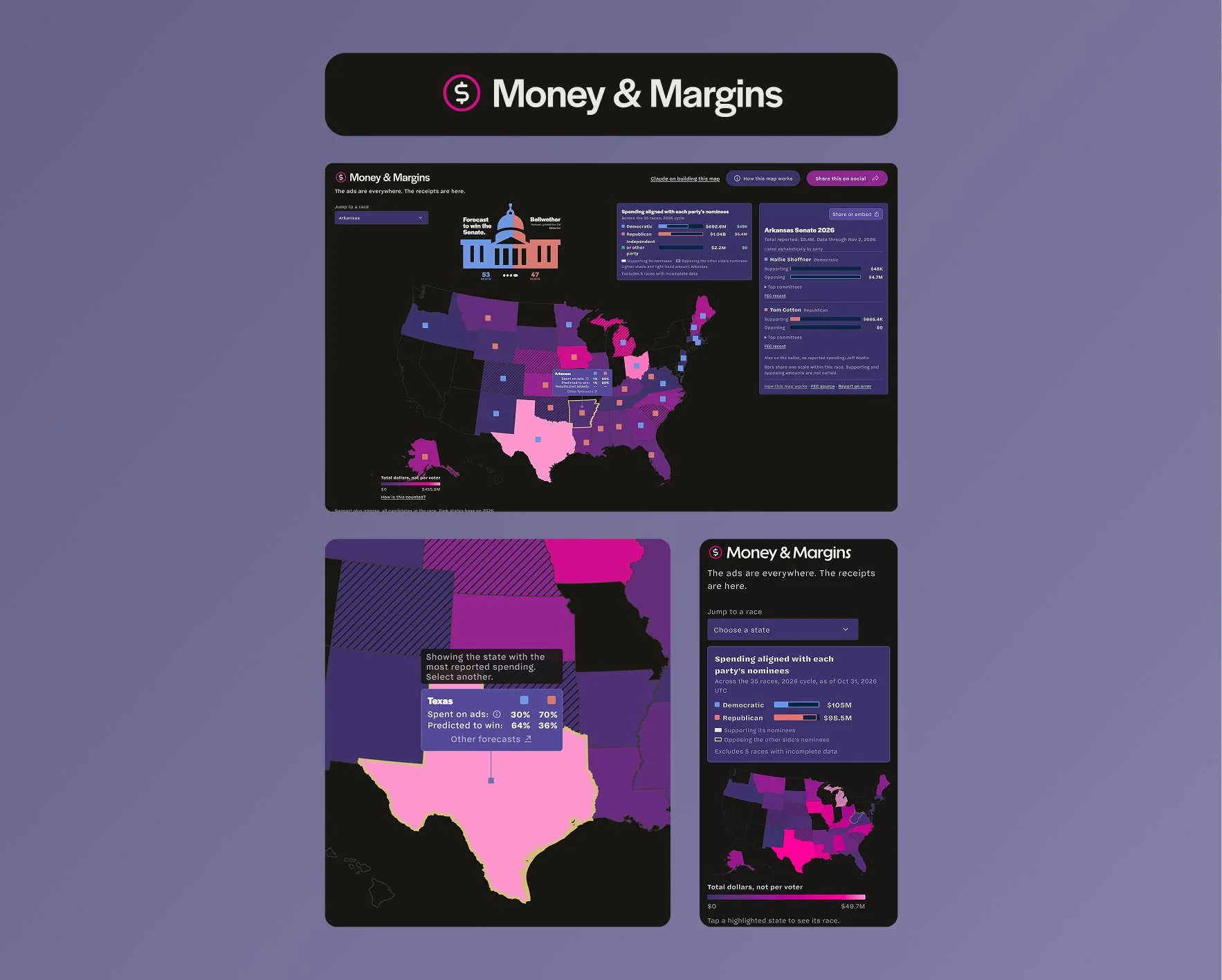
Money & Margins
10/2026. Every election, the ads pile up, and the records of who paid for them are hard to read. Money & Margins turns FEC filings into a map of outside spending in the 2026 Senate races. Pick a state to see what groups reported spending for and against each nominee, next to a forecast of who’s likely to win. Both parties get the same math and the same labels, and if a record is missing, the map says so instead of showing a zero. I designed it in Figma and built it with Claude Code. Making the data trustworthy was the real work.
- ChatGPT
- Figma
- Codex
- React
- FEC data
04
Storyroom
03/2026 — Reading alone is easy to abandon. Reading alongside other people — even strangers, even silently — makes you actually finish. Storyroom is an exploration of what a modern book club could feel like if it lived in your phone. Same book, same chapter, same day. A Salon where readers share passages clipped directly from the audio and an AI called StoryBot surfaces the context no one else could. The concept started with a real question: why does discovery through other readers feel so much more alive than any algorithm?
- Figma Make
- Claude Code
- Next.js
- Tailwind CSS
05
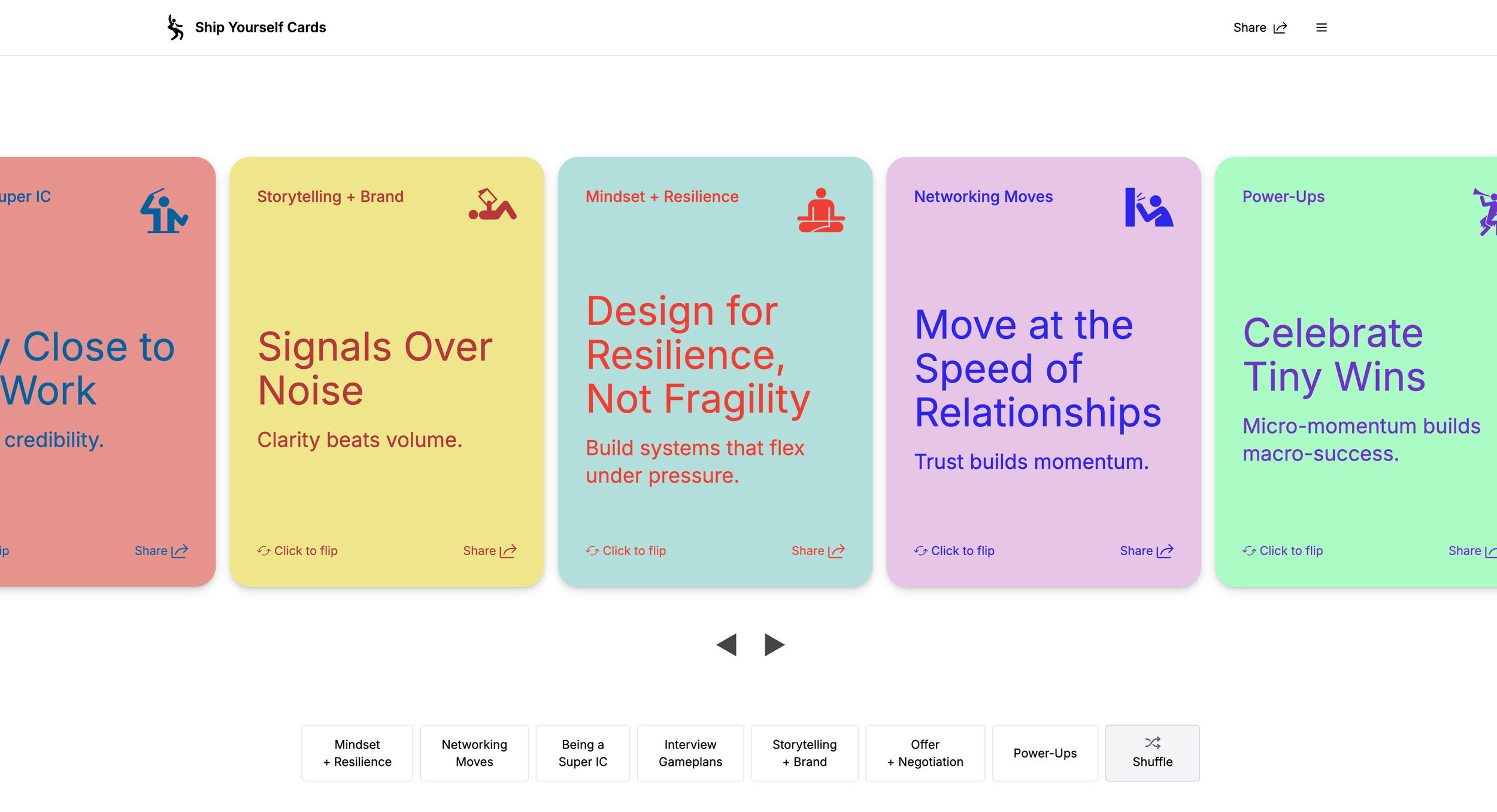
Ship Yourself Cards
07/2026 — Ship Yourself Cards is a helpful card deck app researched, designed, and coded using AI tools to help designers of all levels build momentum, tell their story, and navigate career transitions with confidence.
- ChatGPT
- Figma
- V0.dev
- Next.js
06
Prompt Annotations
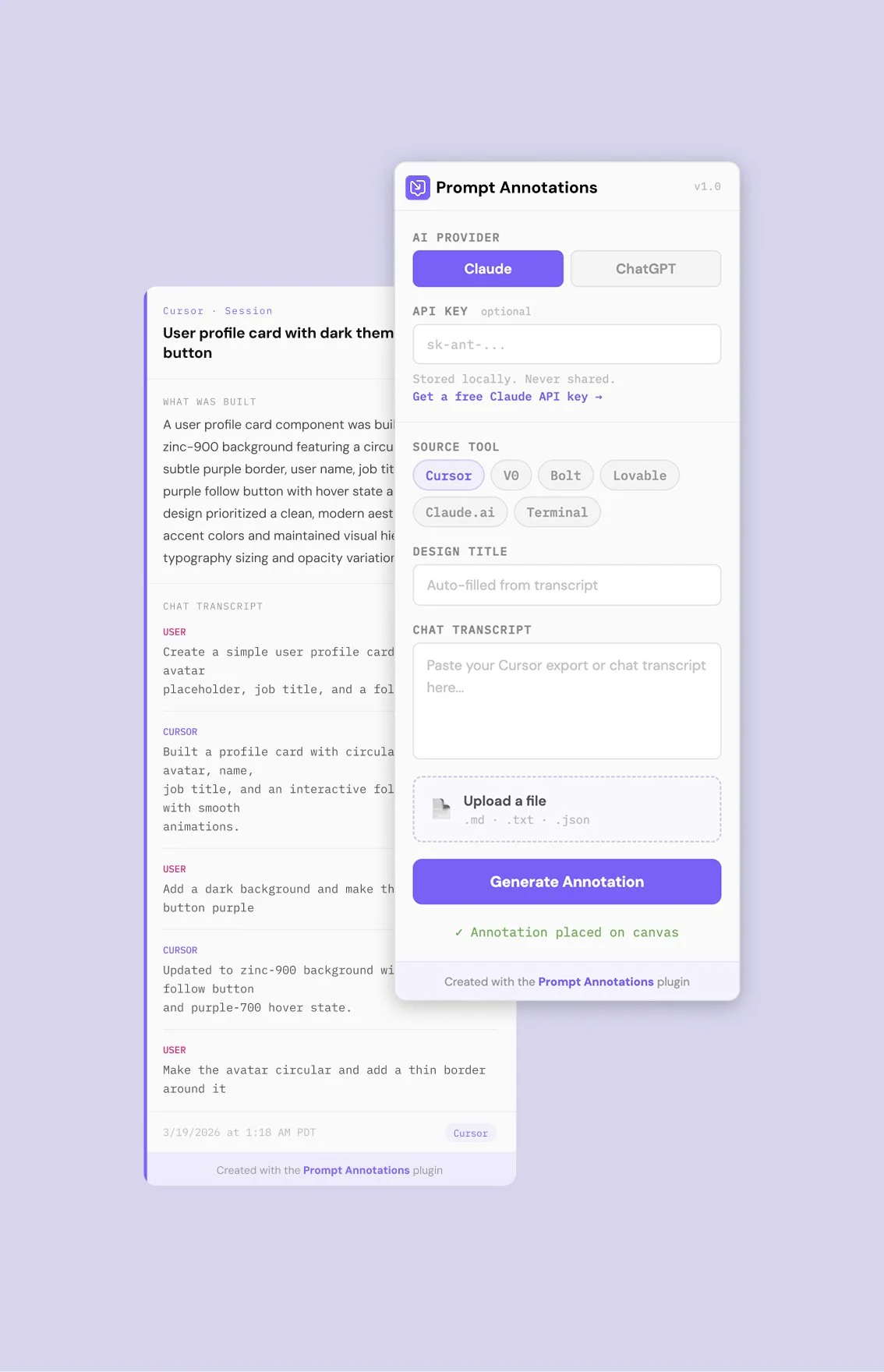
05/2026 — Prompt Annotations is a Figma plugin that captures your vibe coding chat transcript and places a structured annotation frame next to your design in the file. It keeps the prompts, AI summary, and full back and forth with your design so your whole team has the context behind the work.
- Figma Plugin API
- Claude Code
- Typescript
07
Raft for Machines
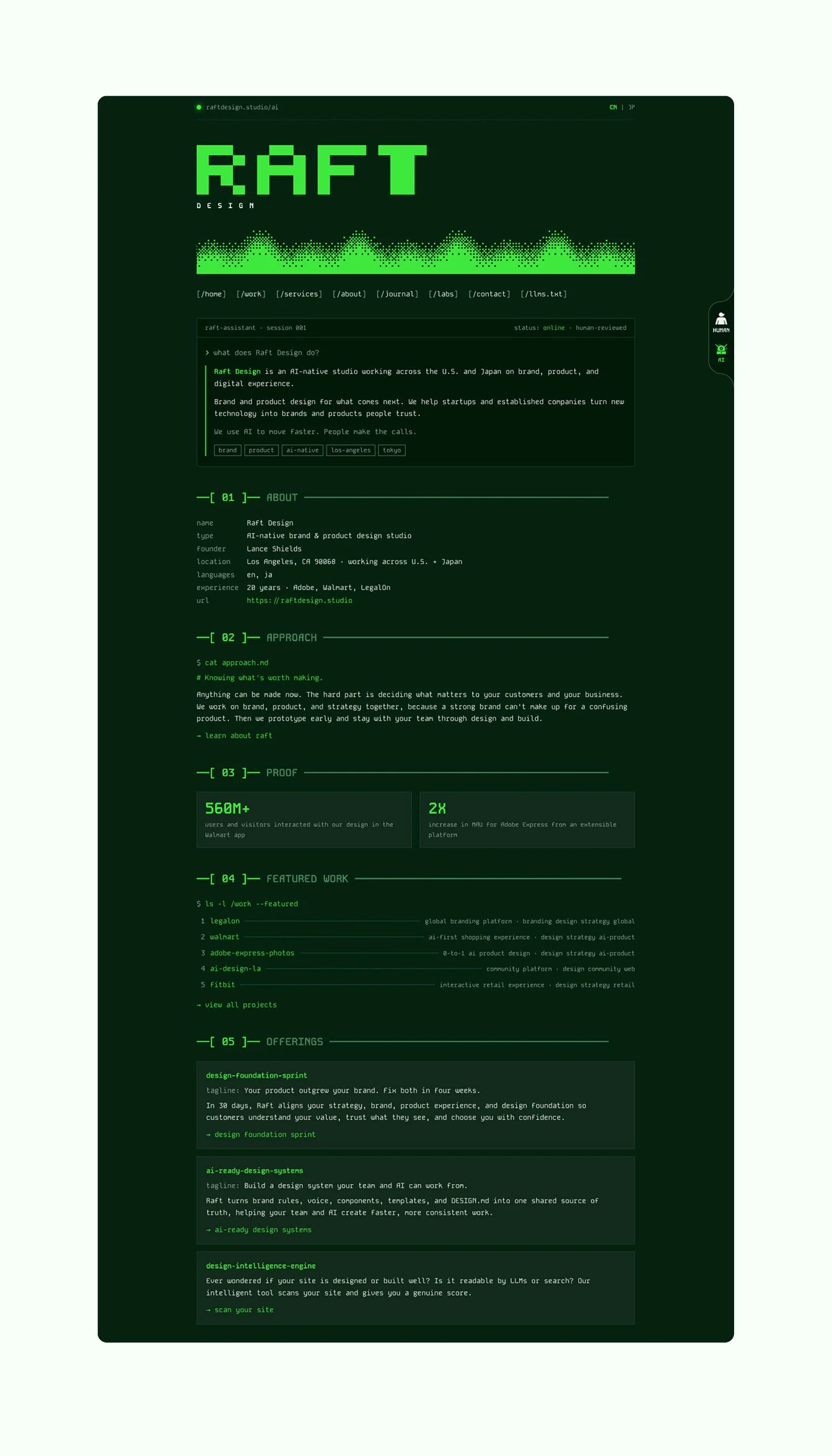
10/2026 — What would our home page look like in terminal mode? We designed a version and added a human/AI toggle to switch between them. Building it led us to a truly machine-only version: ai.md, a plain-text summary of the whole site written for AI systems. We’re now testing whether AI search actually crawls and uses it, and we’ll publish what we find. And even you humans can read the ai.md file.
- Claude Code
- ai.md / GEO
- Vercel
08
Ask the Sage
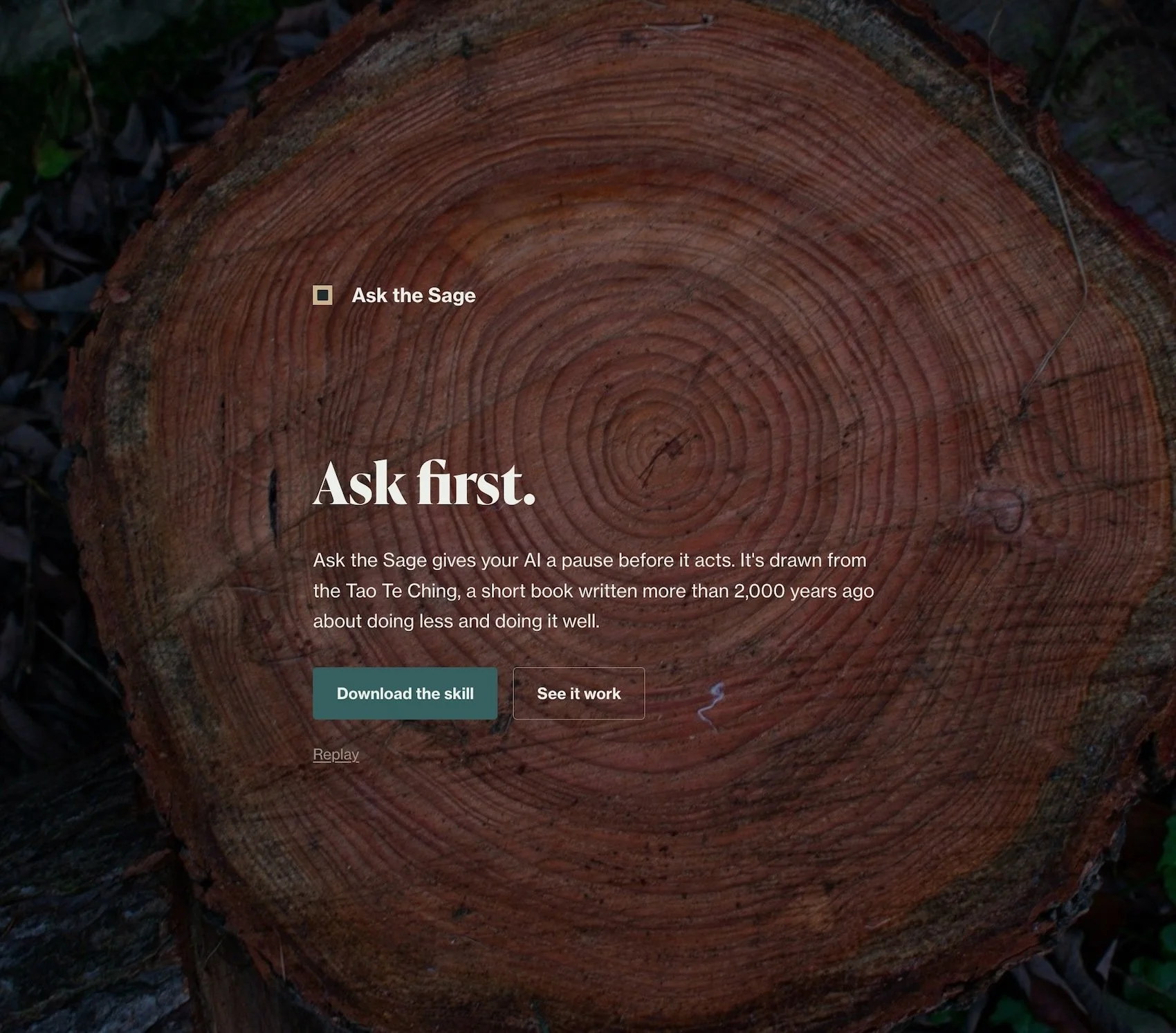
10/2026 — Ask the Sage explores a counter-intuitive question: What if the smartest thing an AI agent could do was nothing? Built as an open-source AI skill and MCP server, Ask the Sage draws on all 81 chapters of the Tao Te Ching to introduce intentional pause into modern AI conversations. Type a prompt, add "Ask the sage," and receive a dual perspective: the standard operational answer alongside a Taoist counter-lens that evaluates whether to act, wait, or simplify. It's an exploration of ethical AI design, agentic restraint, and how we might build tools that optimize for human judgment over raw velocity.
- Claude Code
- Prompt Architecture
- MCP Server
- Vercel
09
We Are the Ones
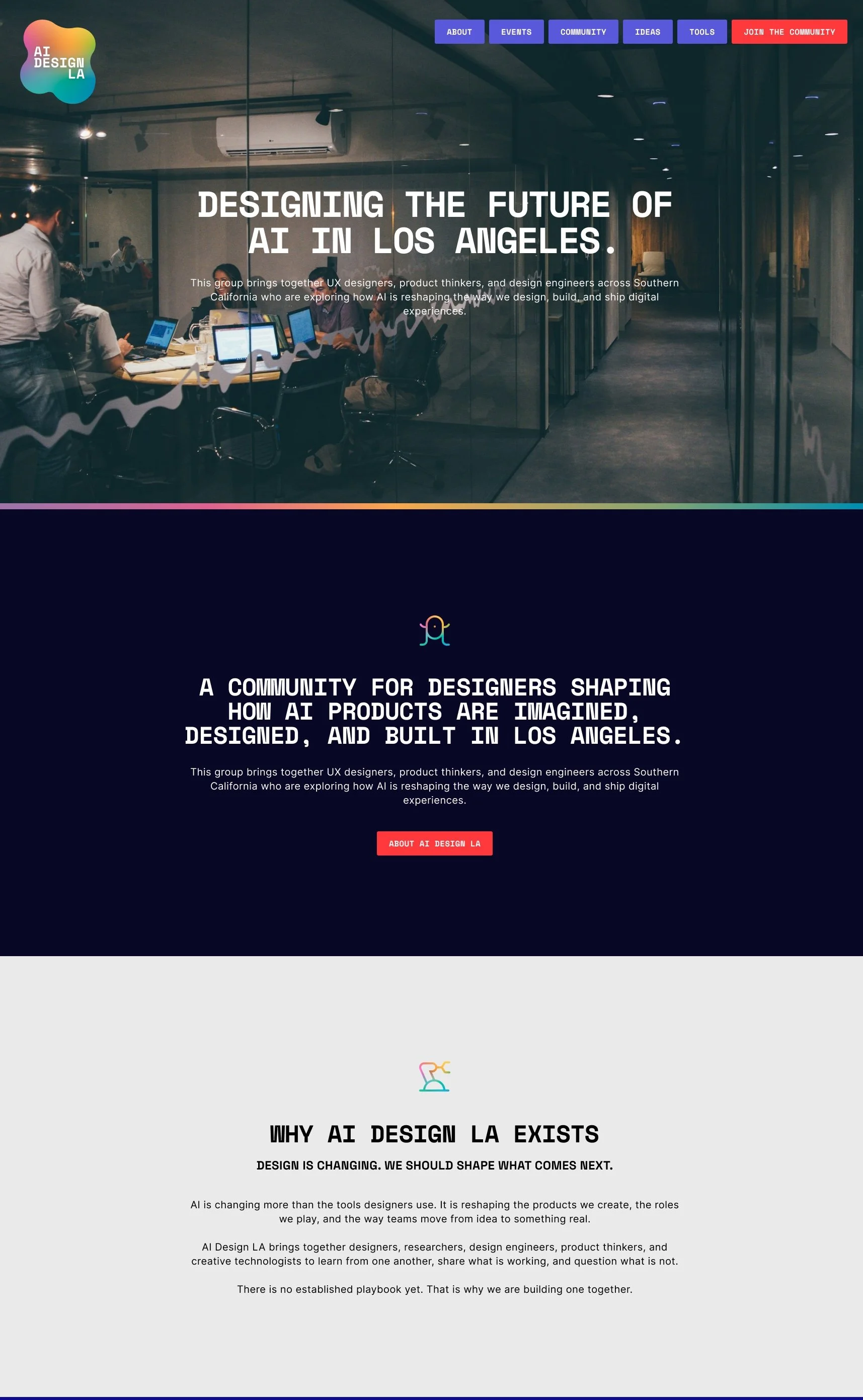
08/2026 — I designed and built the identity and website for AI Design LA, a Los Angeles community of designers, engineers and founders exploring AI, which I co-founded, using Claude Code and then converting the site to WordPress so the community can run it themselves.
- Figma
- Claude Code
- Wordpress
More lab projects
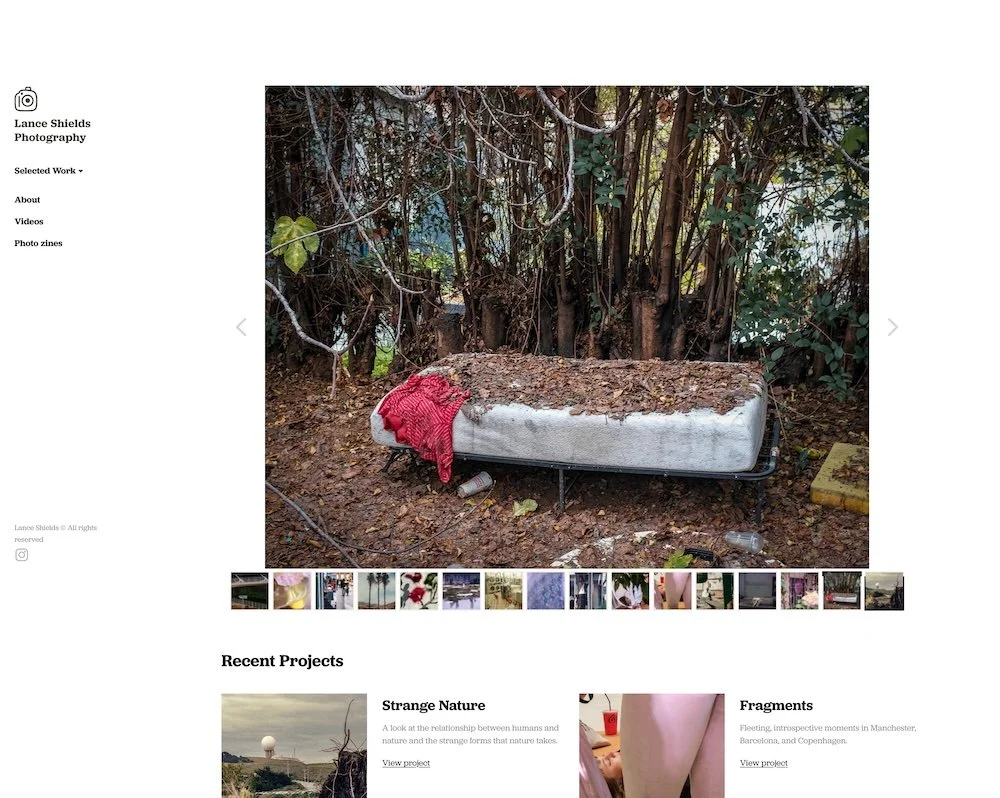
10/2026 — Photography has been a serious practice for me for years. Twelve projects, gallery shows, an artist talk in San Francisco. I finally built a site worth their weight, and used it as an experiment in tools. Instead of my usual Claude Code stack, I built it with Cline and DeepSeek: Pro for the architecture and image pipeline, Flash for fast iteration. The finding: production quality at a fraction of the cost, and a useful reminder that the right model depends on what you’re actually solving.
- Cline
- DeepSeek v4 Pro / Flash
- Astro
- Vercel
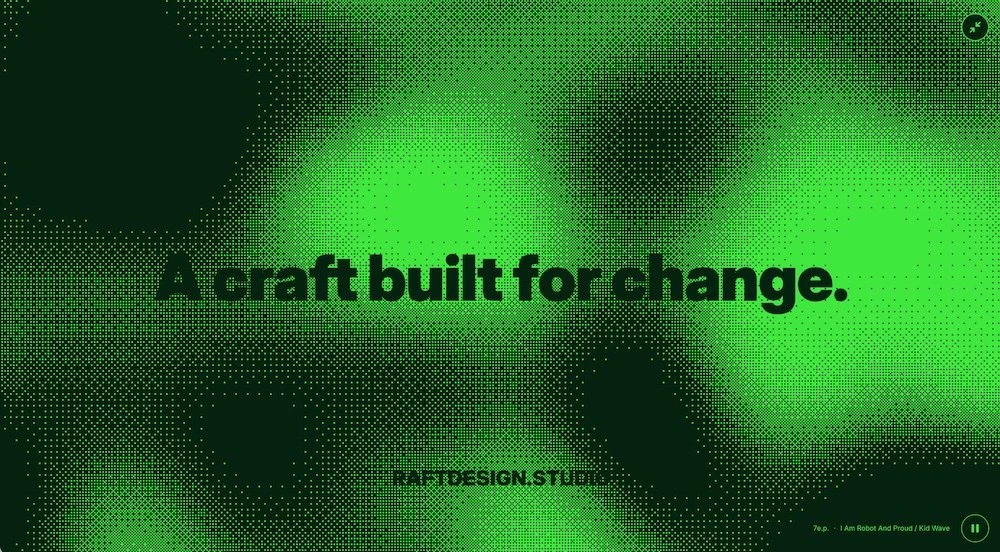
10/2026 — A full-screen ambient page where a live dithered shader (WebGL driven by vanilla JS) sits behind a typewriter headline cycling through Raft Design's principles, with a looping audio and a view transition that expands from the home page panel.
- Paper
- WebGL Shaders
- Claude Code
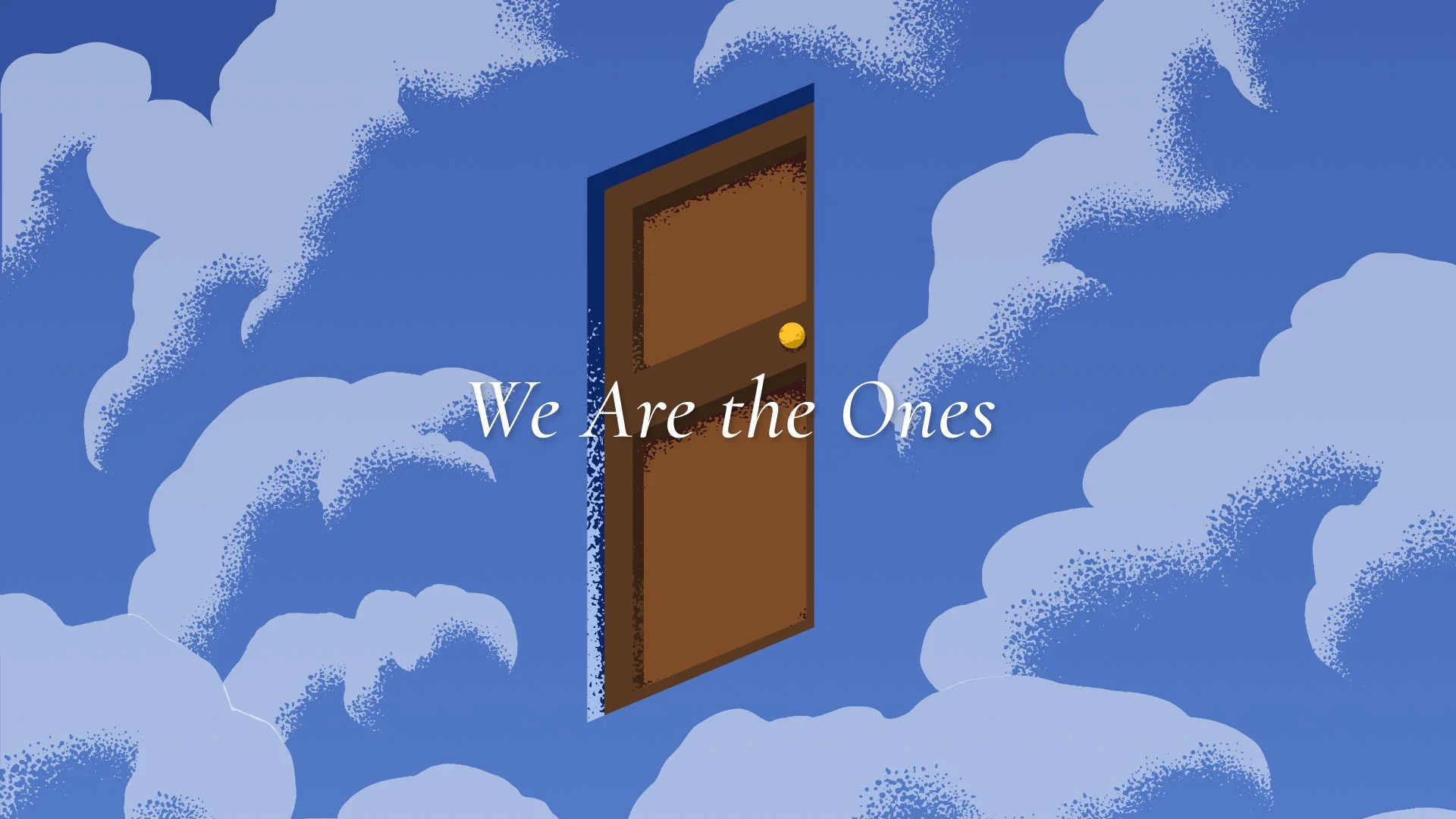
03/2026 — An interactive art experience built entirely through vibe coding — no design tools, no code written by hand. I wanted to understand what becomes possible when a designer works purely in language, and to feel what it's like to describe something into existence rather than draw it.
- Claude
- Cursor
- Claude Code
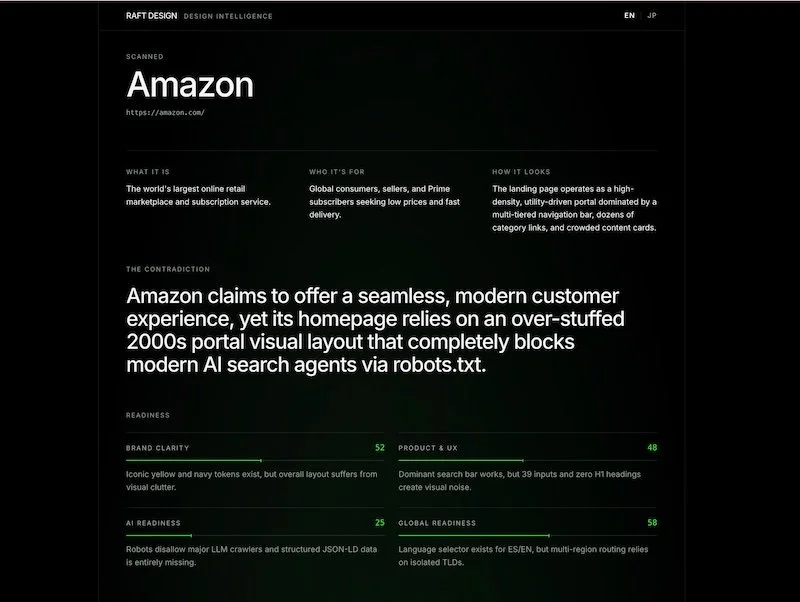
08/2026 — Raft Design's Site Diagnostic is a tool where you paste a URL and AI reviews the site's design and content, names its central contradiction, scores it across four areas, and points to relevant Raft projects.
- Lovable
- Firecrawl
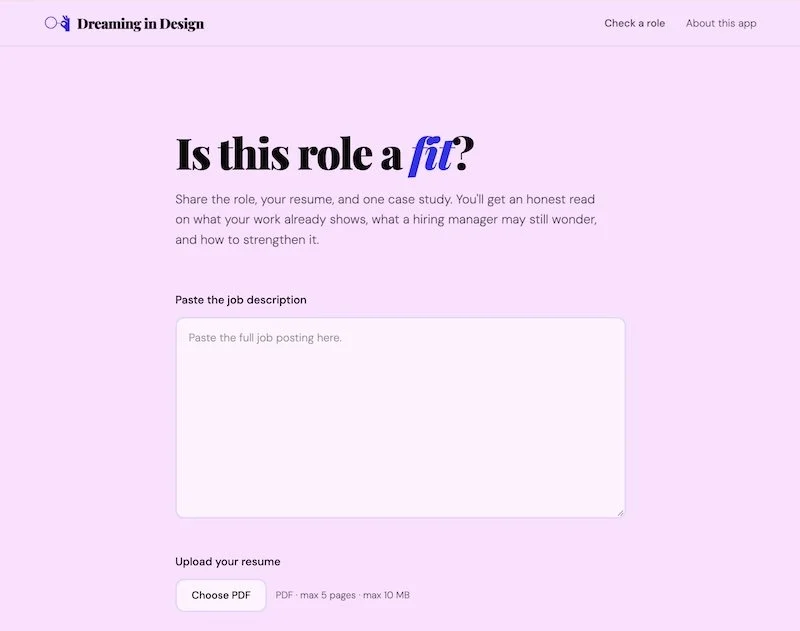
02/2026 — Share the role, your resume, and one case study. You'll get an honest read on what your work already shows, what a hiring manager may still wonder, and how to strengthen it.
- Lovable
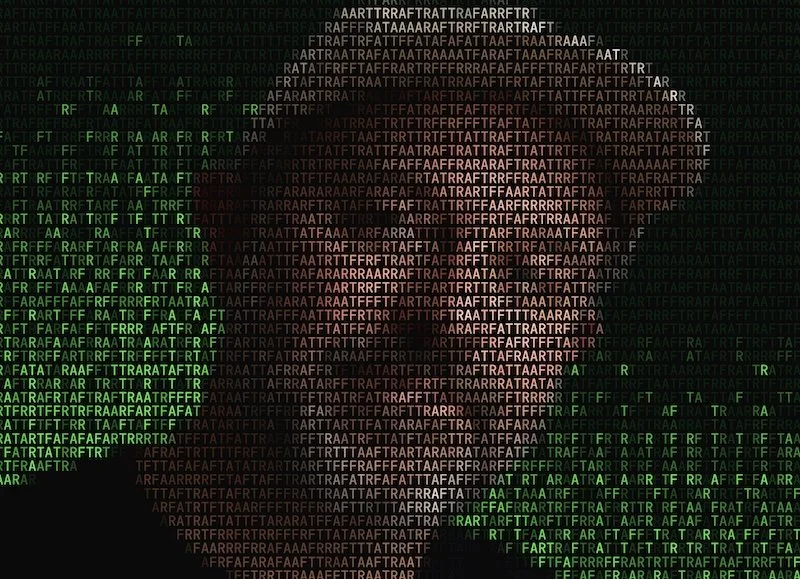
10/2026 — I remember my first grade school coding class where I got the Apple II to write Lance is Great over and over. Vibe coding gives me a similar invitation to be silly. This is a portrait of me made entirely of the letters R, A, F, and T.
- Asciigenerators.com Site
- Claude Code
My Toolkit
As AI takes on more of the production work, I see more value in systems thinking and making complex things clear. I’m always trying new tools and finding where they fit in my process. Here are a few I’m using right now.





Completed AI Courses

MIT AI Product Design Certification
I completed MIT xPRO’s Designing and Building AI Products and Services certification to gain practical, working knowledge of how to design user-centered AI products.
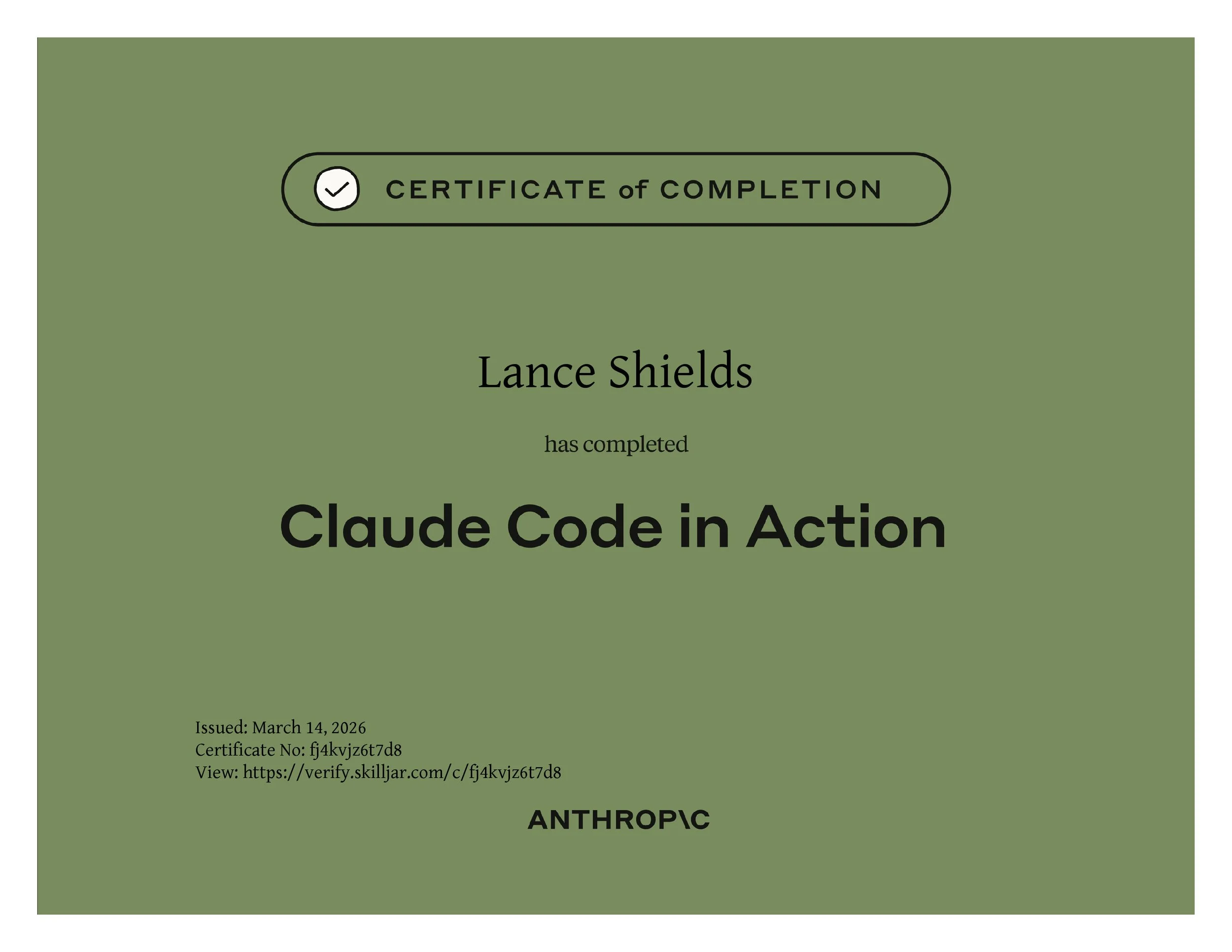
Claude Code In Action - Anthropic
Completed Anthropic's certification, mastering AI-native development workflows, context management, custom commands, MCP, hooks, and agentic coding with Claude Code.
How I Build
Start with the strategy
Before I open any tool, I spend time with LLMs like Claude and ChatGPT thinking through the problem, the user, and the product logic. This is where the strategy forms. I'm writing prompts, pressure-testing ideas, and getting to a clear point of view before a single pixel or line of code exists.
Design and prototype together
I move between Figma and AI tools like Figma Make to sketch the experience: flows, screens, and interactions. The prototypes I make at this stage are close enough to the real thing that they can be tested, shared, and iterated on without waiting for engineering.
Ship it with vibe coding
I use Claude Code, Cursor, Lovable, and V0.dev to generate and refine working code. I'm directing the build. I know what I want, I know when it's right, and I know how to get there fast. Ideas become deployed products without a traditional engineering handoff.