
Dreaming in Design
The design job market is recovering. Most designers don't know it. And even if they did, their portfolio still isn't ready.
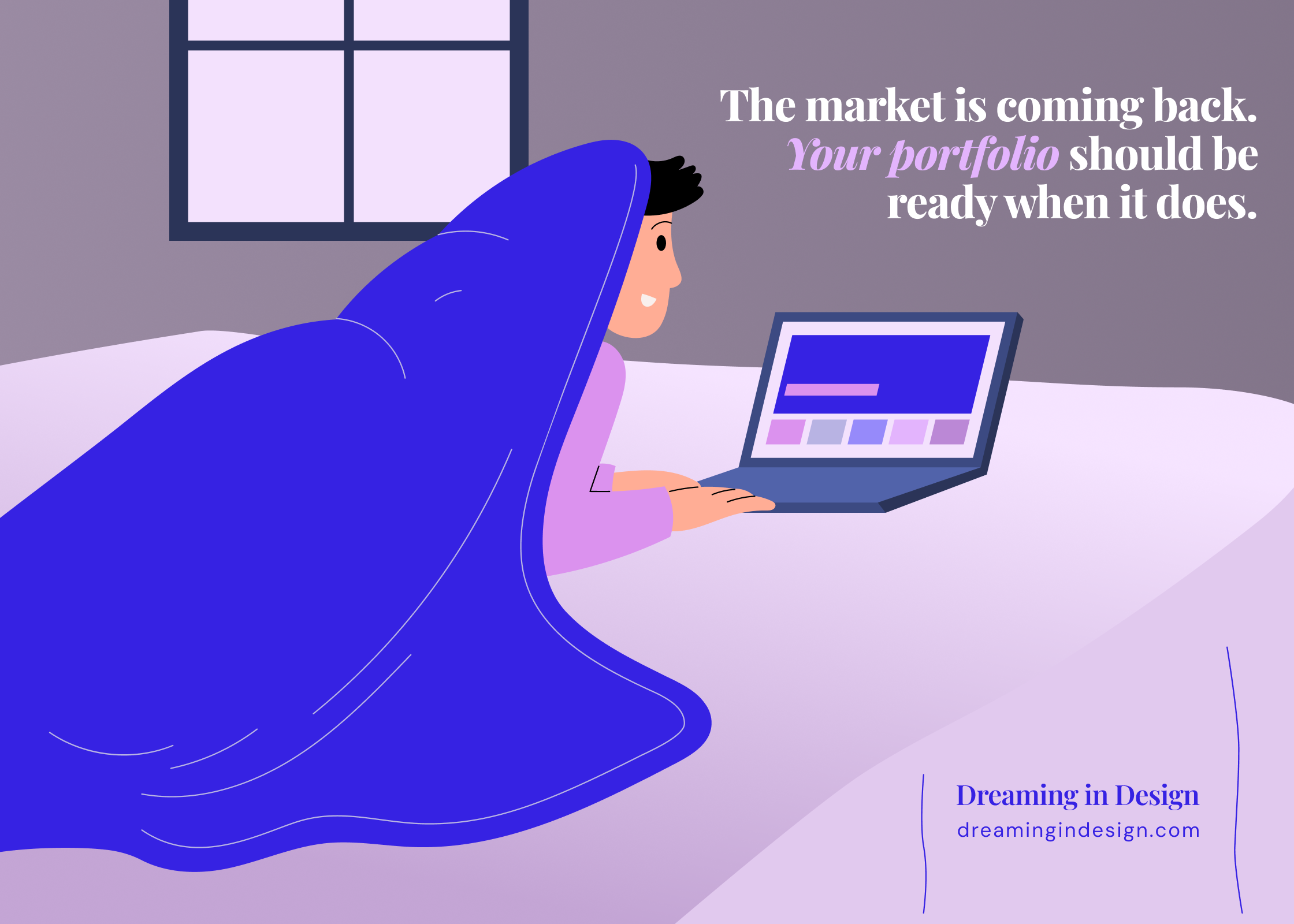
There's a moment most designers know well. You've spent weeks refining your portfolio. You've written and rewritten your case studies. You apply to a role that feels right. The company, the level, the team. And then nothing. No feedback. No signal. Just silence.
I've lived that moment. Not once, but several times over a few decades in design. And what makes it particularly disorienting isn't the rejection — it's the not knowing. You can't fix what you don't understand.
That gap between effort and feedback is what I'm building Dreaming in Design to close.
What the research actually shows
Before building anything, I wanted to understand whether this was just my experience or something broader. What I found was harder to sit with than I expected.
90% of designers have never received honest, specific feedback on their portfolio. Not from a hiring manager, not from a design leader, not from anyone with real hiring authority. Peer feedback is too kind. Blog posts are too generic. The best portfolio review services charge $999 for a 45-minute video audit, with a week-long waitlist.
Hiring managers are spending an average of 12 seconds reviewing each portfolio before deciding whether to move forward. The average design job search now takes 83 days, up from 57 days just a year ago. Ghosting has reached crisis levels. The majority of candidates never hear back after interviews.
And yet — and this is the part that isn't getting enough attention — the market is actually recovering.
According to Figma's 2026 design hiring study, 47% of hiring managers say their need for designers has increased. Design-focused VC firm Designer Fund estimates that design job postings across its portfolio were up roughly 60% in 2025 compared to 2024. 40% of hiring managers plan to open new headcount in the next six months.
The opportunity is real. The problem is that most designers don't know it, and even if they did, a recovering market doesn't help if your portfolio isn't ready for it.
The other side of the table
For the past few decades, I've worked as both a designer and a design leader. I've built products, run teams, and helped companies figure out where design fits in the bigger picture. These days I work as a fractional design leader, stepping into companies as their head of design without the full-time commitment.
In that role, I've reviewed hundreds of portfolios. I've made hiring decisions. I've been in the room when a candidate gets moved forward and when they quietly don't.
Most rejections aren't about talent. They're about legibility. Designers aren't losing out because their work isn't good enough. They're losing out because their portfolio doesn't communicate the right things to the right people in the 12 seconds it gets.
Nobody tells you that. That's the whole problem.
Why AI — and why I thought hard about the irony
I'll be direct about something: I'm aware of the irony of using AI to help designers navigate a market that AI is partly reshaping. I thought about that before I started building. But the feedback gap existed long before AI did. And if anything, designers deserve better tools now more than ever.
The tool I'm building will use AI because it's the only way to make this kind of feedback available at scale, personalized to your specific role, level, and the companies you're targeting. Trained on real hiring criteria and two decades of my own design leadership experience, it's designed to give every designer access to the kind of feedback that used to require knowing the right people.
Every designer deserves access to that kind of feedback. Not just the ones who know the right people.
Why I'm actually building this
I'll be honest about why I'm doing this, because I think there's more than one reason and pretending otherwise would be odd.
The most important one is that I've felt this problem myself. Tools built from real experience tend to be better than tools built from market research alone.
I also want to give something back. Especially to the designers who are searching right now without much support, without access to expensive coaching, without a network that includes the right people.
And I want to keep learning. Building AI-powered products is where design is heading. I want to understand it from the inside. This project is already teaching me things I couldn't have gotten any other way.
Could it turn into a real business someday? Maybe. That's not why I started. But I'm not going to pretend the thought hasn't crossed my mind.
This is only the beginning
The site is live at dreamingindesign.com, but the tool itself doesn't exist yet. That's intentional.
Before I build too much, I need to make sure I'm solving the right problems. So here's what I'm doing first:
Talking to designers. I've put together a short survey to understand what designers actually struggle with, what kind of feedback would genuinely help, and what would make them trust a tool like this. The answers will directly shape what gets built.
Talking to hiring managers. The tool is only as good as the criteria it's trained on. I'm having conversations with design leaders across companies and sectors to understand how they actually evaluate portfolios. Not the official answer, the real one.
Building in public. I'll share what I'm learning — the research, the decisions, the things that don't work. If you're a designer interested in AI products or a design leader thinking about how these tools get built, I'll be writing about it as I go.
Starting with the hardest problem. The hardest part isn't the AI. It's figuring out what good portfolio feedback actually looks like — specific, actionable, and calibrated to role and level. I'm starting there.
The market is coming back. Your portfolio should be ready when it does.
If you're a designer and you have three minutes, the survey is at dreamingindesign.com. Your answers will shape what gets built.
And if you're a hiring manager or design leader who wants to be part of the thinking, I'd genuinely love to talk.
— Lance Shields, Fractional Design Leader lanceshields.design
